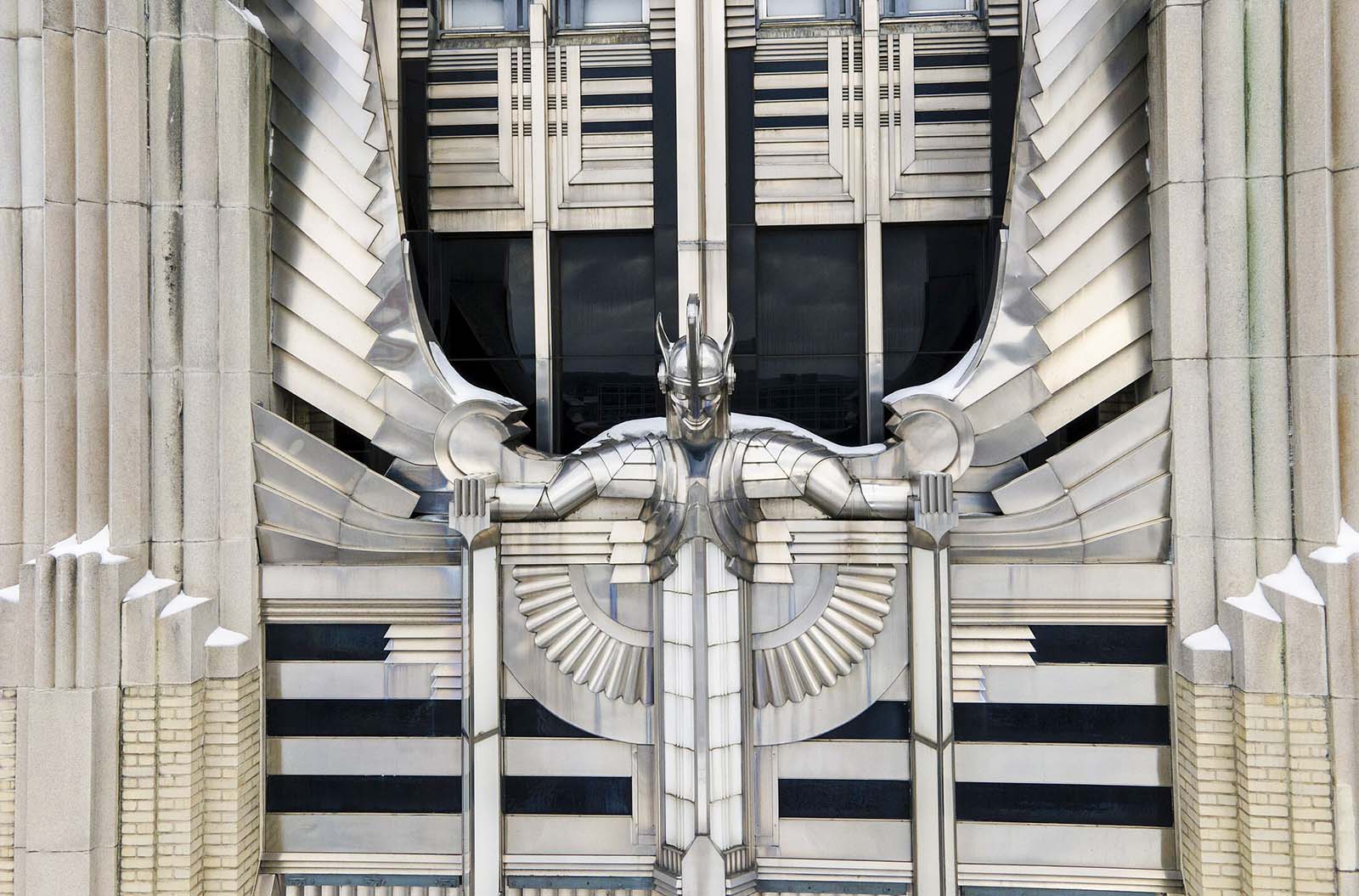
Emerging at the dawn of the 20th century, Art Deco captured a world in transition — one balancing tradition and modernity, craftsmanship and technology.
Born in Paris in the 1910s, just before World War I, this new aesthetic quickly became a symbol of progress, sophistication, and optimism.
From the grand architecture of urban skylines to the refined elegance of jewelry and fashion, Art Deco embodied the confidence of a new age.
The name “Art Deco” itself originated from the Exposition Internationale des Arts Décoratifs et Industriels Modernes held in Paris in 1925.
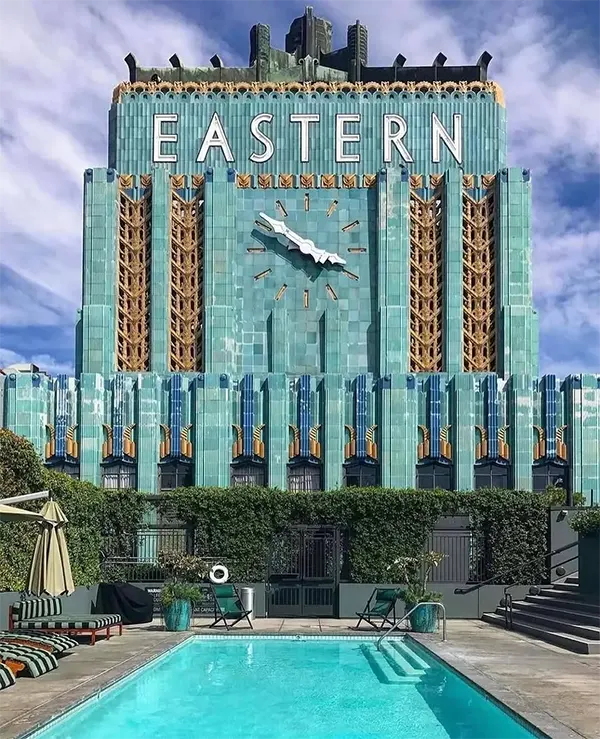
The Eastern Columbia Building, Downtown Los Angeles. It opened on September 12, 1930, after just nine months of construction.
The exhibition celebrated the union of fine art and modern industry, inspiring designers and architects worldwide to embrace beauty through geometry, precision, and innovation.
The movement soon spread across continents, reshaping the visual language of design from Europe to the Americas, Asia, and beyond.
Art Deco drew inspiration from a remarkable blend of influences. Its foundation lay in the sharp geometric forms of the Vienna Secession and Cubism, combined with the bold colors of Fauvism and the theatrical energy of the Ballets Russes.
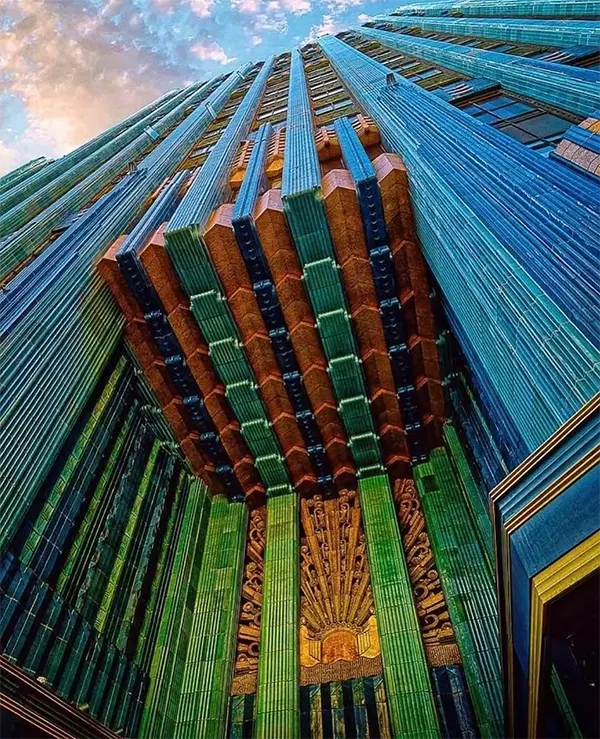
The Eastern Columbia Building
Designers also borrowed from the artistic traditions of ancient civilizations — Egyptian motifs, Mayan patterns, and Oriental ornamentation — reinterpreting them through a modern lens.
The result was a style both timeless and forward-looking, one that celebrated symmetry, order, and the allure of the exotic.
The defining features of Art Deco were its clean lines, stylized forms, and elegant symmetry. Facades were often adorned with zigzags, chevrons, sunbursts, and stepped motifs that echoed the rising skylines of modern cities.
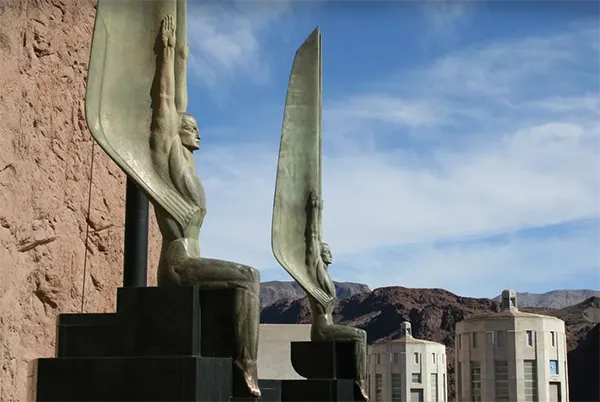
Winged Figures of the Republic at the Hoover Dam, Boulder City, Nevada.
Materials played a crucial role in the movement’s visual impact: marble, onyx, ebony, and ivory were used to express luxury, while new industrial elements such as chrome, stainless steel, and glass reflected technological progress.
Even everyday objects — from radios and lamps to trains and ocean liners — were crafted with sleek precision, merging functionality with artistic beauty.
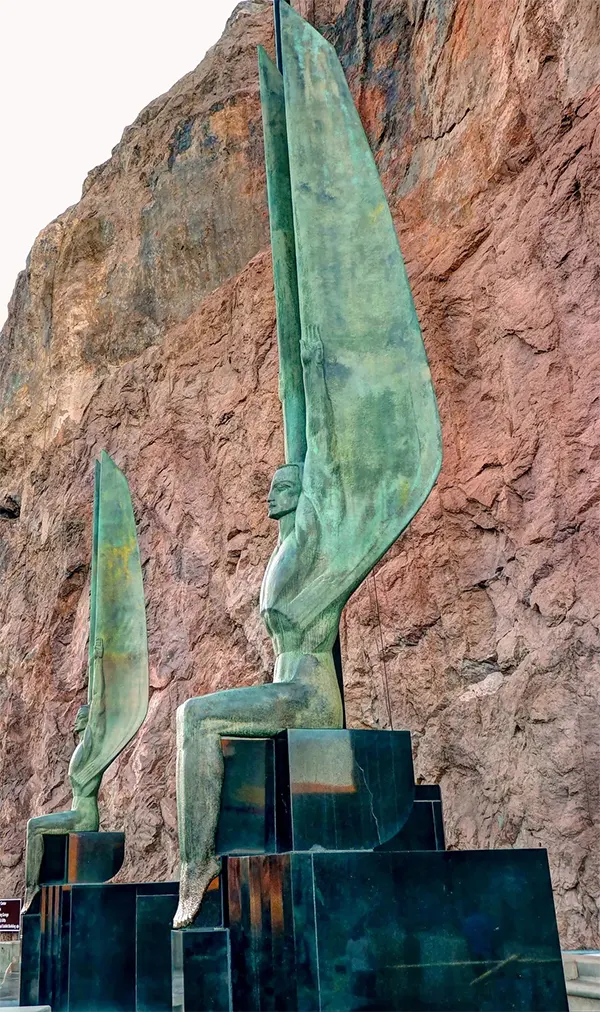
Winged Figures.
Nowhere did Art Deco find a grander stage than in architecture. In New York City, the Empire State Building and the Chrysler Building remain two of its most iconic achievements.
Their soaring silhouettes, adorned with stylized ornamentation, came to symbolize the era’s optimism and faith in human advancement. In Miami Beach, Florida, a softer and more playful version of Art Deco took hold.
Pastel-colored hotels and streamlined facades transformed the cityscape into a living museum of 1930s design, representing the world’s largest concentration of Art Deco architecture today.
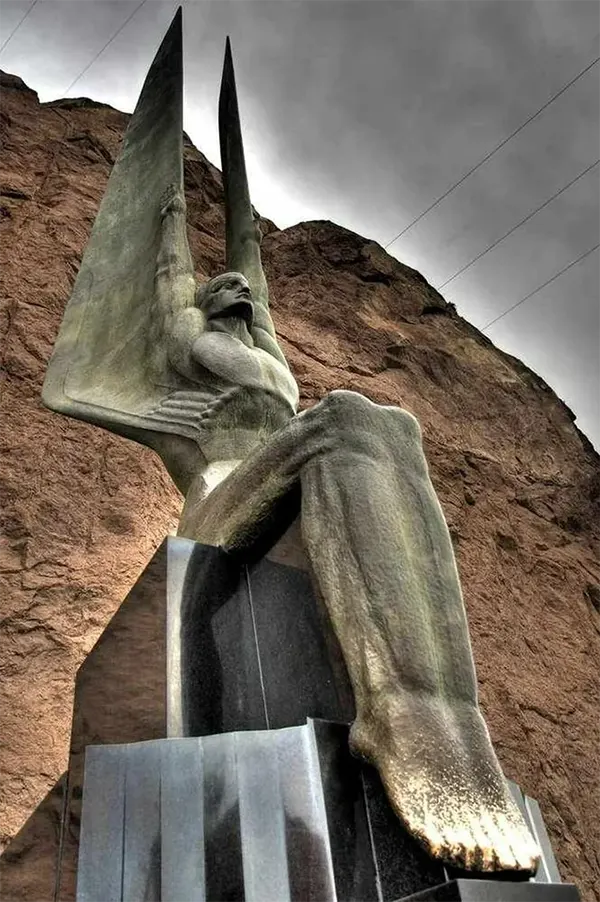
Another view of the Winged Figures.
Beyond architecture, Art Deco permeated nearly every aspect of daily life. It influenced fashion with sleek silhouettes and bold patterns, jewelry with geometric precision and exotic materials, and interior design with luxurious finishes and fine craftsmanship.
The movement also made its way into transportation — from the interiors of grand ocean liners to the design of automobiles and trains — turning motion itself into an expression of style and speed.
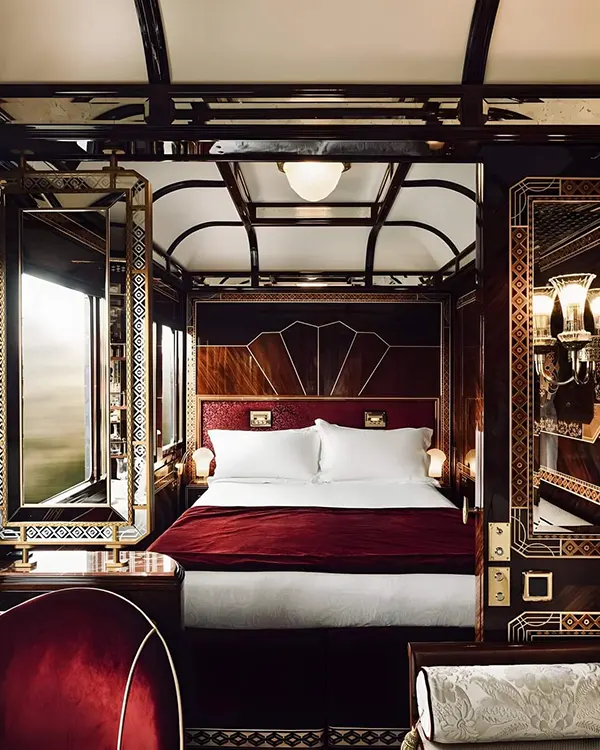
A suite on the Orient Express.
Though its peak faded with the onset of World War II, Art Deco never truly disappeared.
Its influence continues to echo through modern design, architecture, and fashion—proof that the allure of symmetry, geometry, and glamour is timeless.
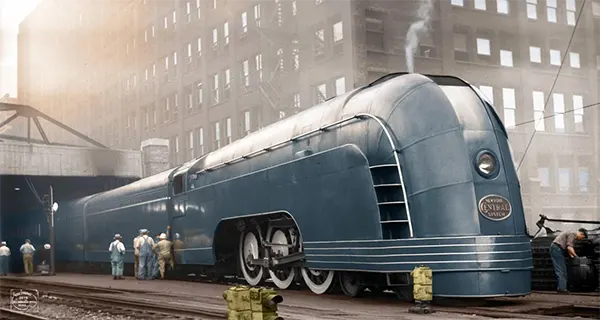
The iconic Art Deco Mercury train operated out of New York from 1936 to 1959.
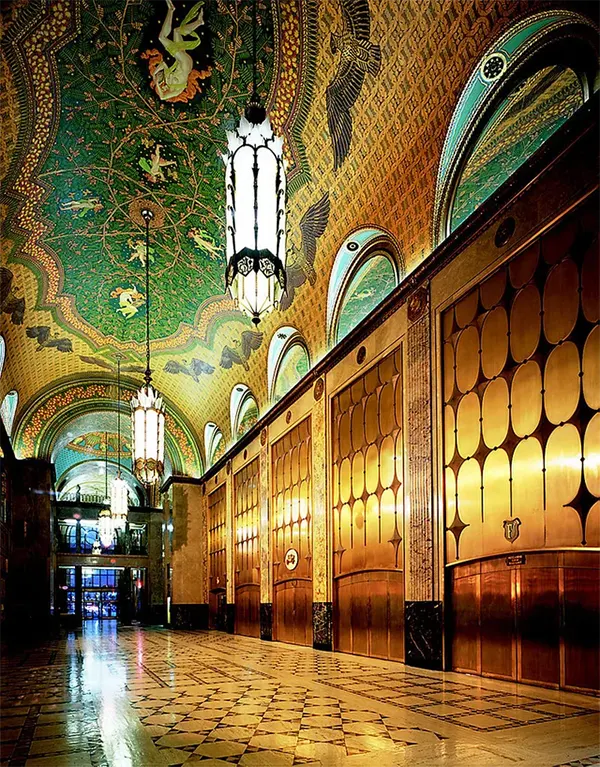
Interior of the Fisher Building, Detroit, Michigan.
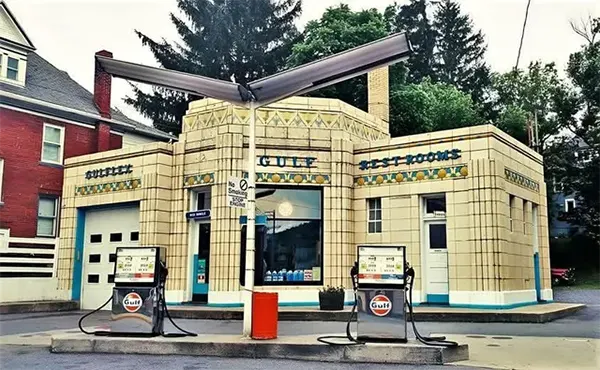
Art Deco gas station in Bedford, Pennsylvania.
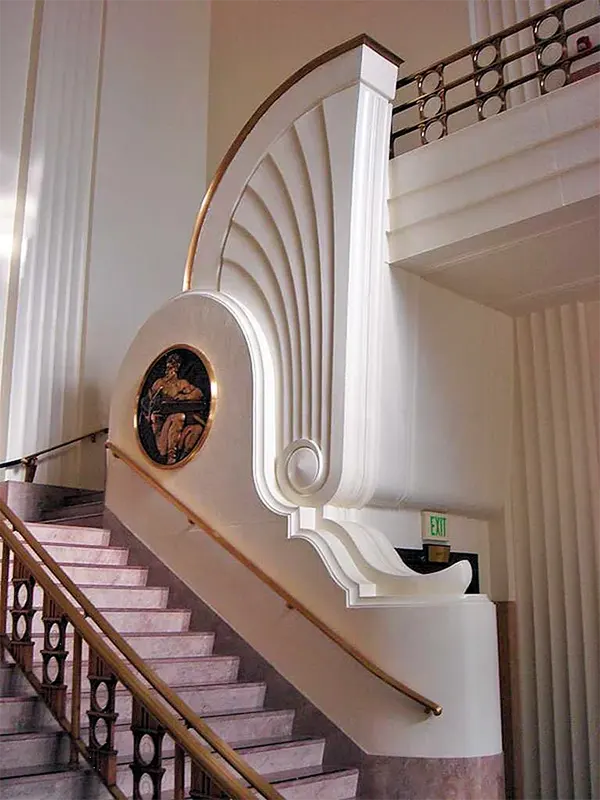
Staircase inside Burbank, California City Hall, built 1943.
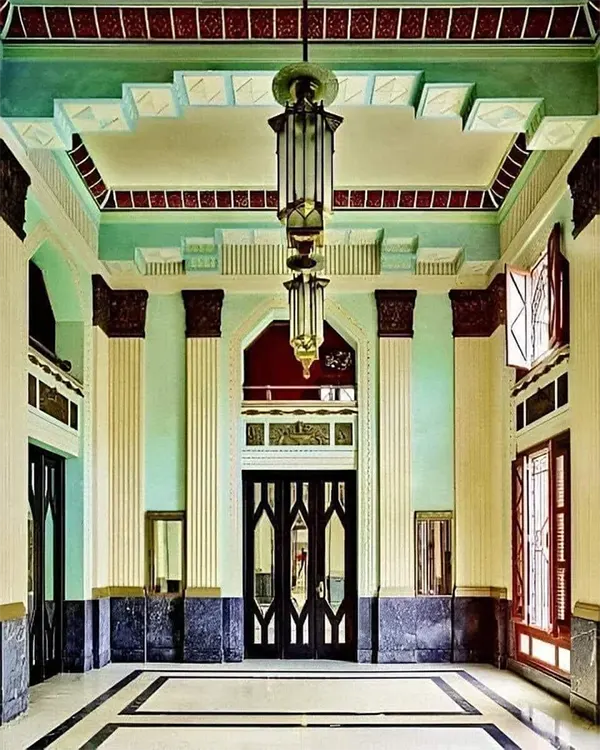
Bacardi Building, Art Deco Lobby, Havana, Cuba, 1930.
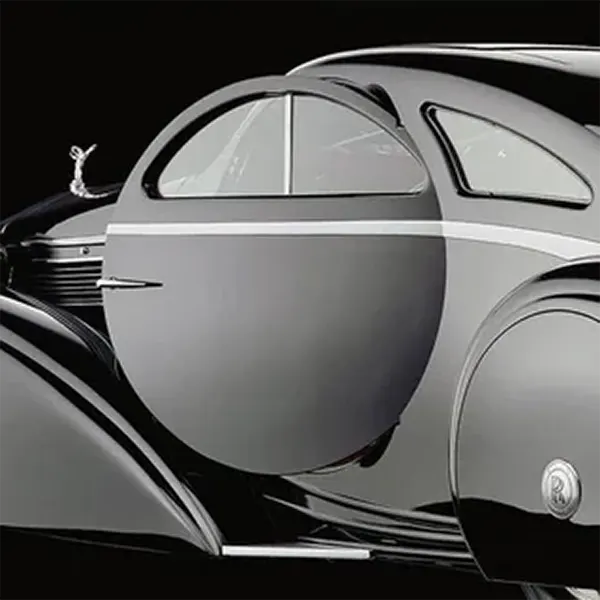
The round door Rolls Royce, 1925.
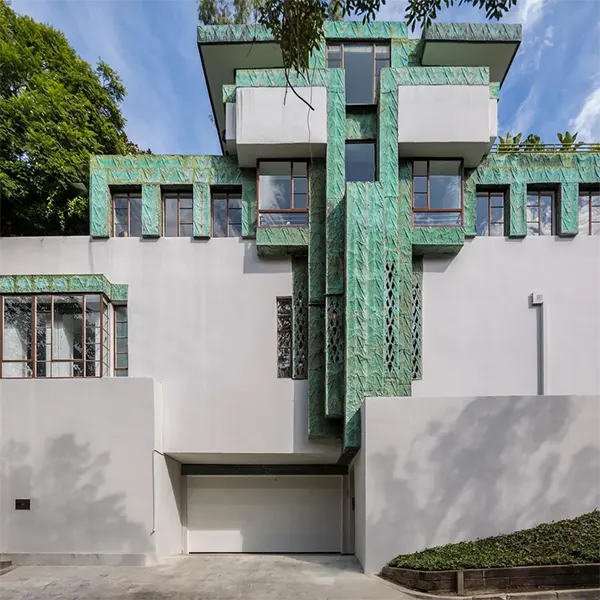
Frank Lloyd Wright Jr’s 1928 Samuel-Novarro House.

Henderson KJ Streamliner, 1930.
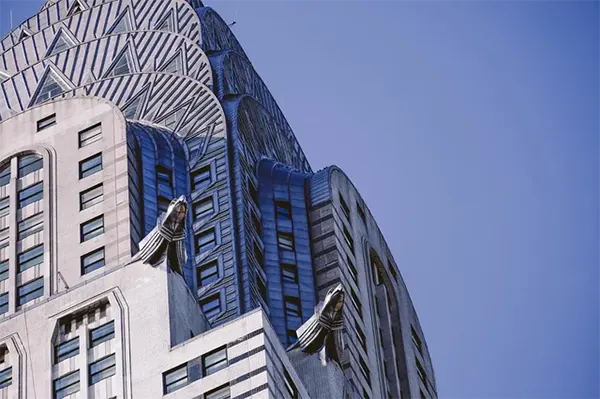
Chrysler Building, New York City. 77 floors, built in 1930.
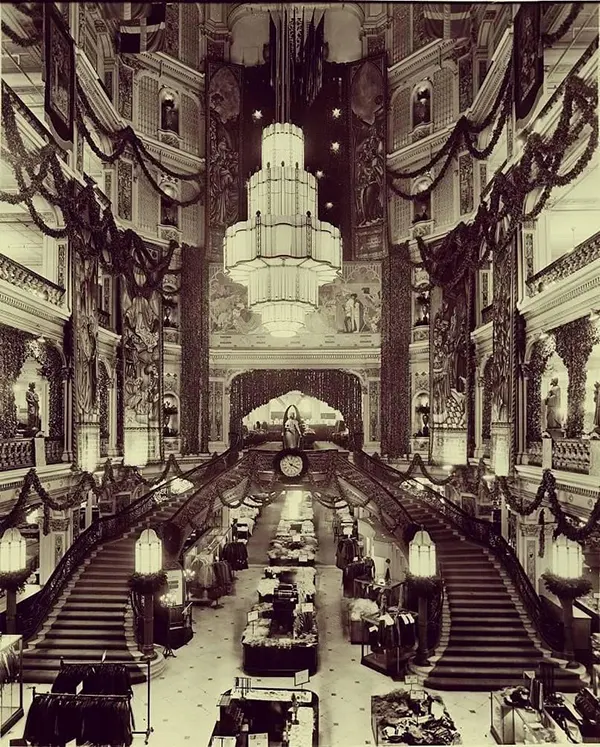
The Interior of Wannamaker’s Department Store, Decorated for Christmas, December, 1920s.
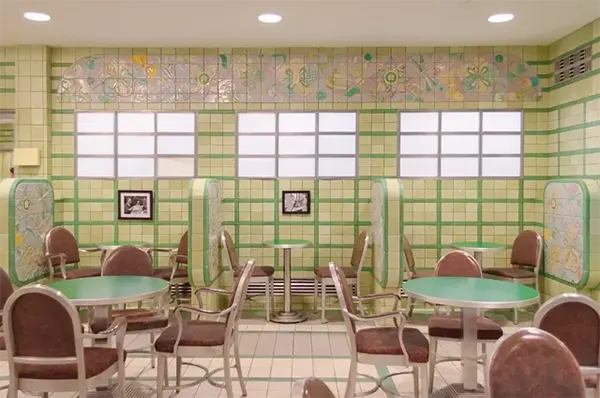
Rookwood Ice Cream Parlor, built 1933, in Cincinnati, Ohio.
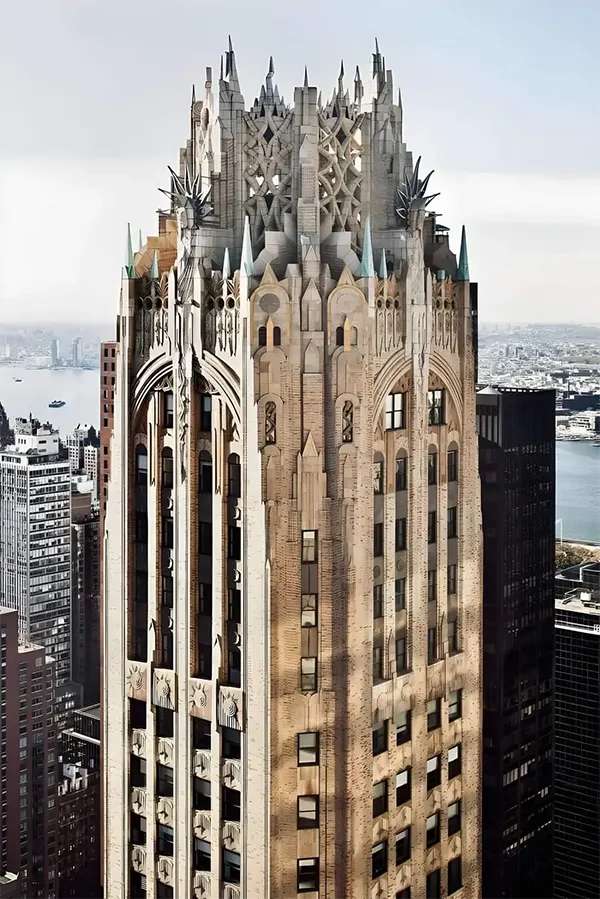
The General Electric Building, 570 Lexington Avenue, New York.
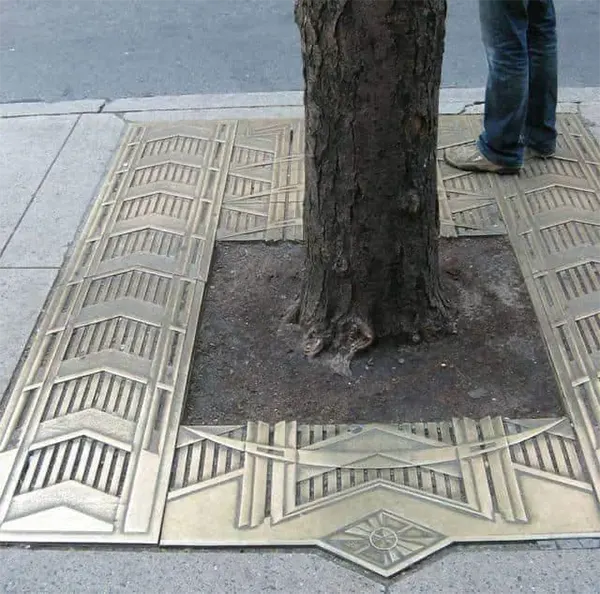
Art Deco Sidewalk grating outside Rockefeller Center, New York City.
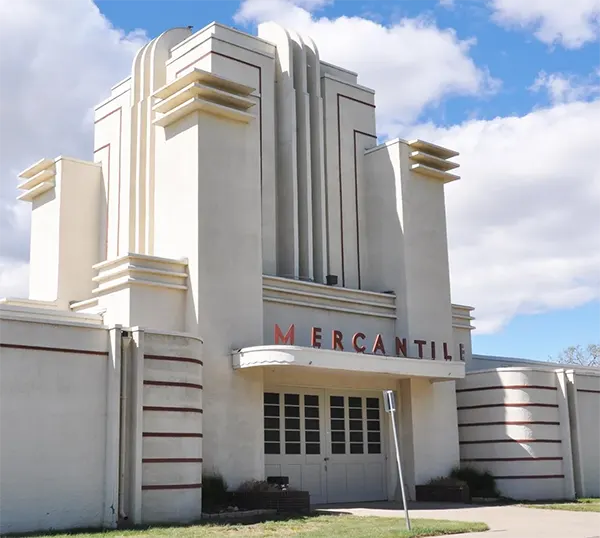
Mercantile Building. Great Falls, Montana, 1937.
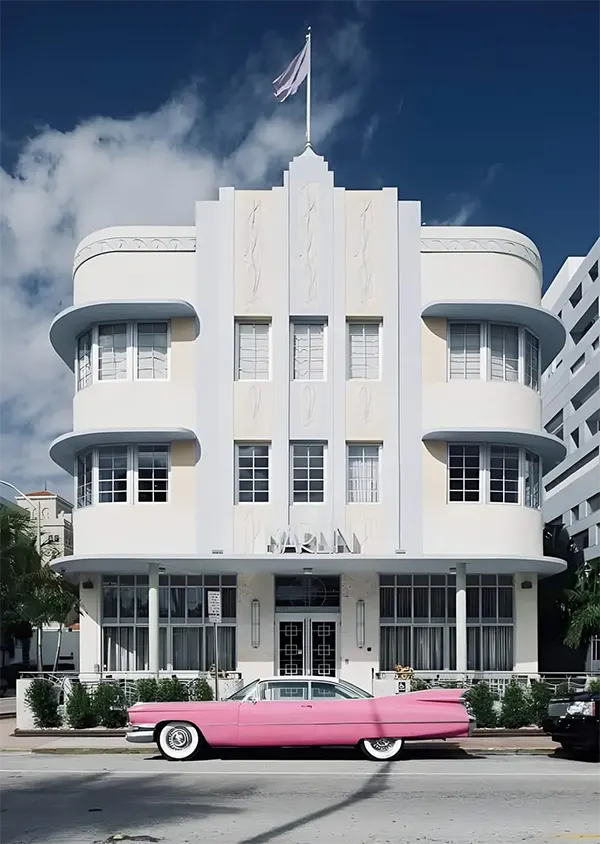
The Marlin Hotel, Miami Beach, built in 1939.

Monument to Yuri Gagarin, the 42.5-meter high statue made of titanium.
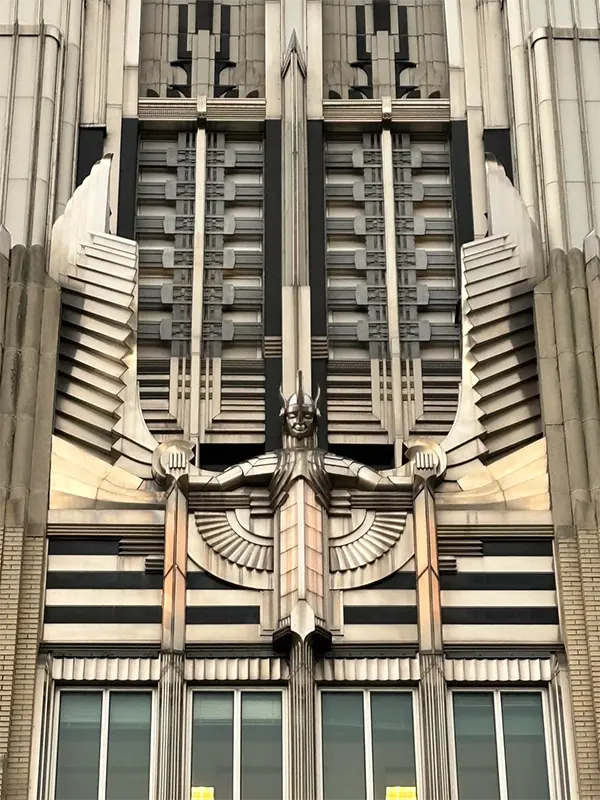
Niagara Mohawk Building in Syracuse, New York.
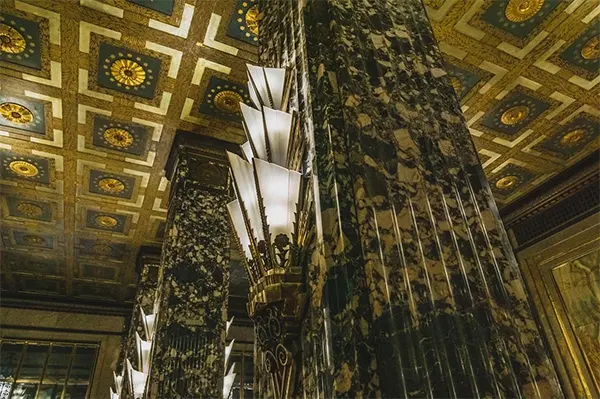
Chandeliers inside the Fisher Building in Detroit, Michigan.
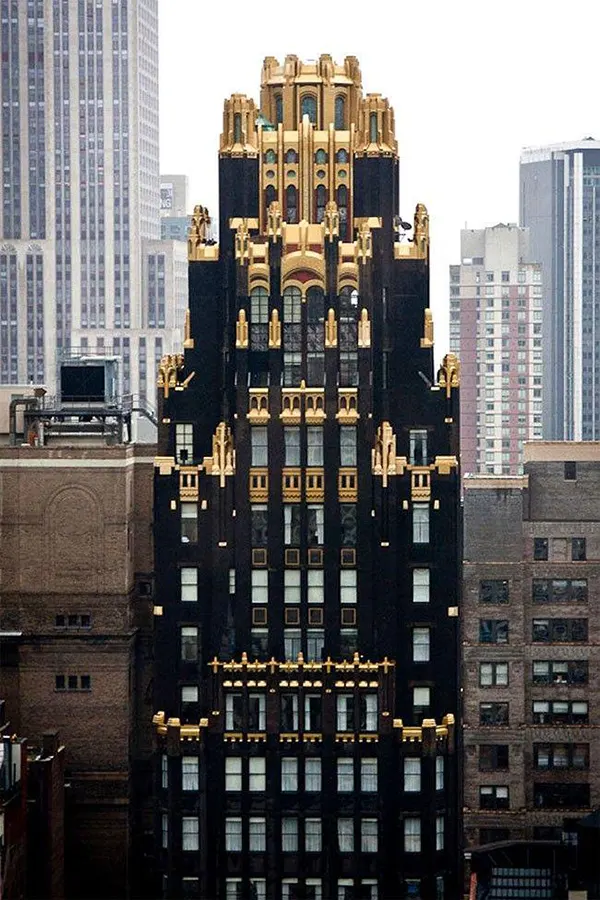
American Radiator Building located in Midtown Manhattan, NYC. Completed in 1924, it was originally built for the American Radiator Company. The main building was converted into The Bryant Park Hotel in 2001.
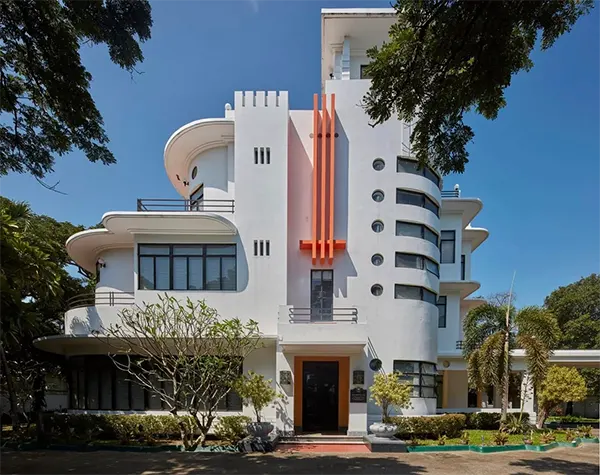
Lopez Ancestral House in La Paz, Iloilo City, The Philippines.
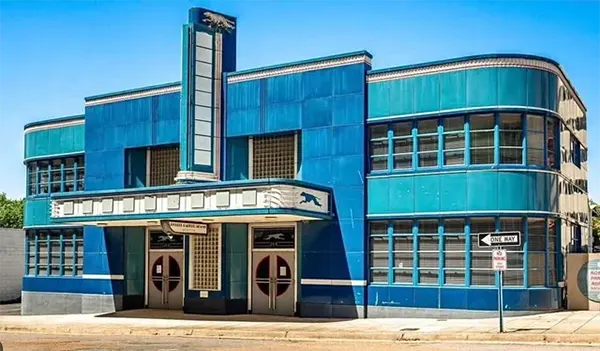
Former Greyhound bus station, 1938, Jackson, Mississippi, US.
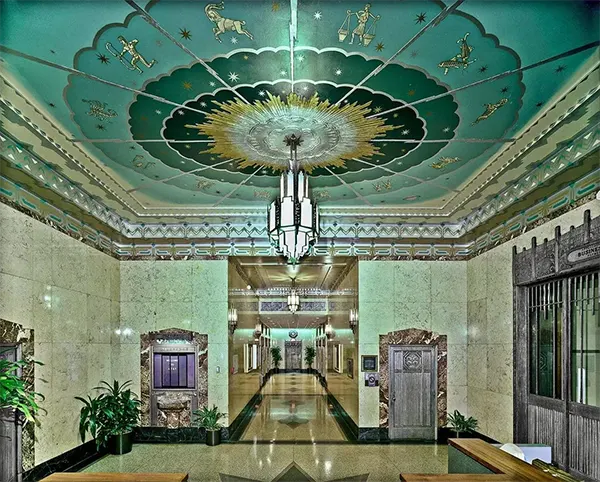
Art Deco Lobby of the Ohio Bell Building, 1930.
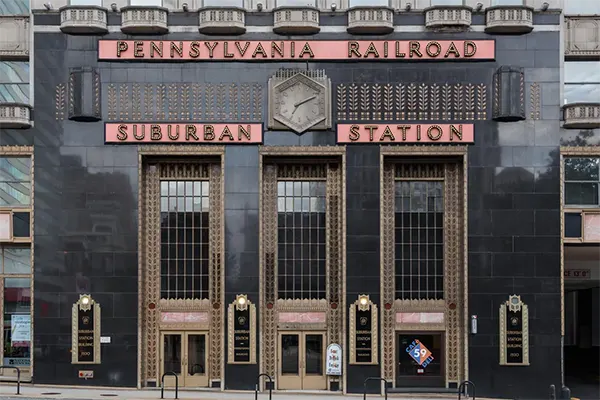
Pennsylvania Railroad Suburban Station in Philadelphia.
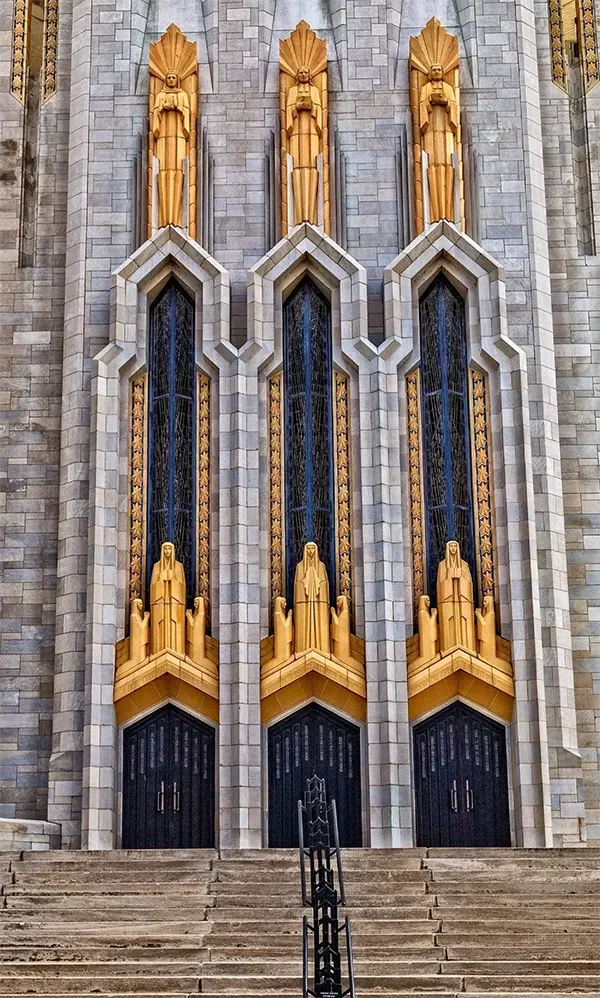
Boston Avenue Methodist Church in Tulsa, Oklahoma. Completed in 1929.
