
Well before the celebratory ceremonies of 1959, Hawaii occupied a complex and often uncertain place within the American story.
Annexed by the United States in 1898, the islands spent more than six decades as a U.S. territory, shaped by global events, cultural exchange, and a growing sense of political awareness among its residents.
Early 20th-century Hawaii was not only a strategic outpost in the Pacific but also a society in transition, where daily life unfolded against the backdrop of debates about identity, representation, and belonging.
.jpg)
The Royal Palace at Honolulu, January 1890.
Throughout the first half of the 20th century, Hawaii’s residents repeatedly petitioned for statehood, seeking the same democratic rights enjoyed by citizens on the mainland.
Many hoped to elect their own governor and gain a meaningful voice in national elections and federal decision-making.
Their case was strengthened during World War II, when people of diverse ethnic backgrounds demonstrated unwavering loyalty to the United States through military service and civilian sacrifice.
.jpg)
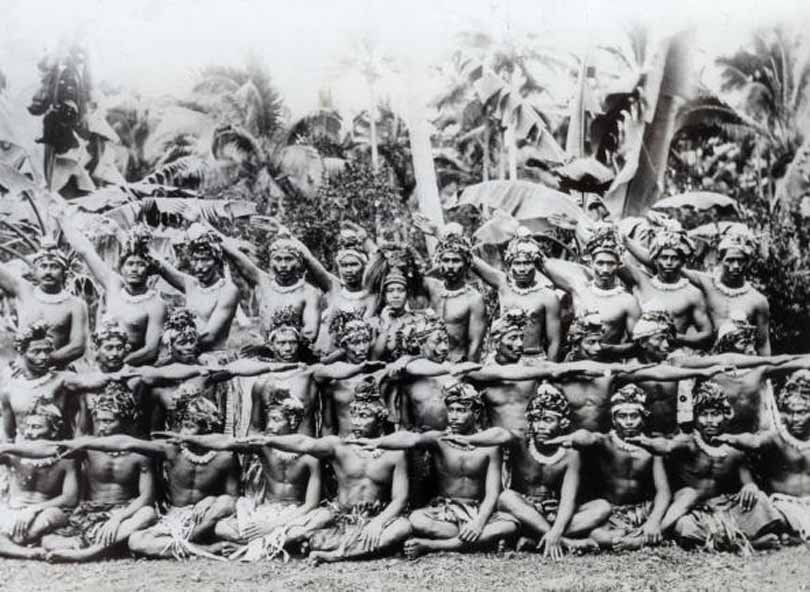
A group of male Hula dancers, 1900.
Despite this, efforts toward statehood were often delayed, dismissed, or quietly set aside in Washington.
Opposition was rooted partly in geography and perception. Some policymakers argued that Hawaii’s distance—nearly 2,000 miles from the mainland—made it fundamentally different from other states, lacking a “natural” connection to the contiguous United States.
.jpg)
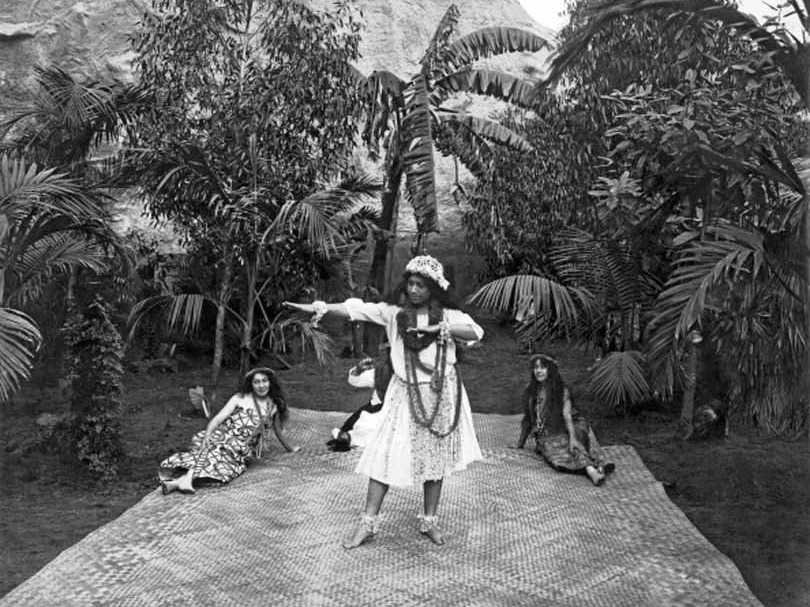
A Hawaiian woman dances on a grass mat while two other women watch, 1900s.
These views, formed even at the time of annexation, contributed to decades of hesitation before Hawaii was finally admitted as the 50th state in August 1959, following a referendum approved by more than 93 percent of voters.
The photographs presented here capture Hawaii during those years of waiting, offering rare visual glimpses of life in the islands before statehood reshaped its political future.
.jpg)
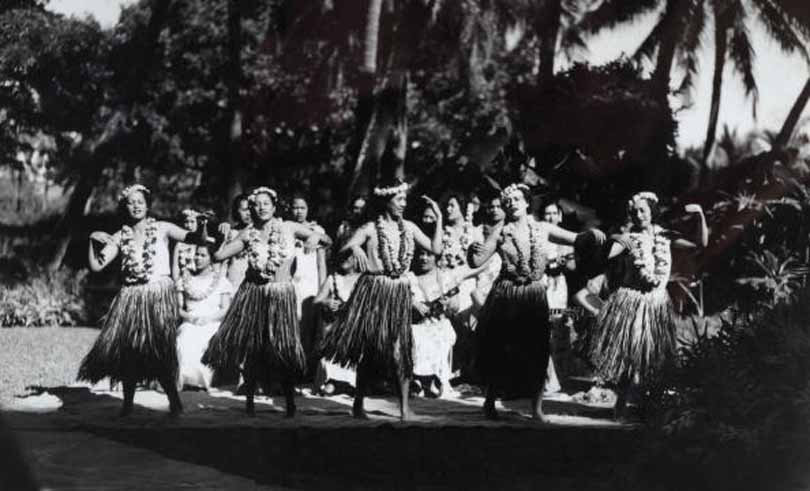
Female hula dancers, 1900s.
.jpg)
Two local men in their raft rest by the beach at Waikiki Bay, showing Diamond Head in the background, 1900s.
.jpg)
A Hawaiian Sunrise Soiree. Two couples, one in tails, dance on the beach in the early morning to the sounds of a ukulele, 1920.
.jpg)
Two native Hawaiians with outrigger canoes at the shoreline in Honolulu, 1922.
.jpg)
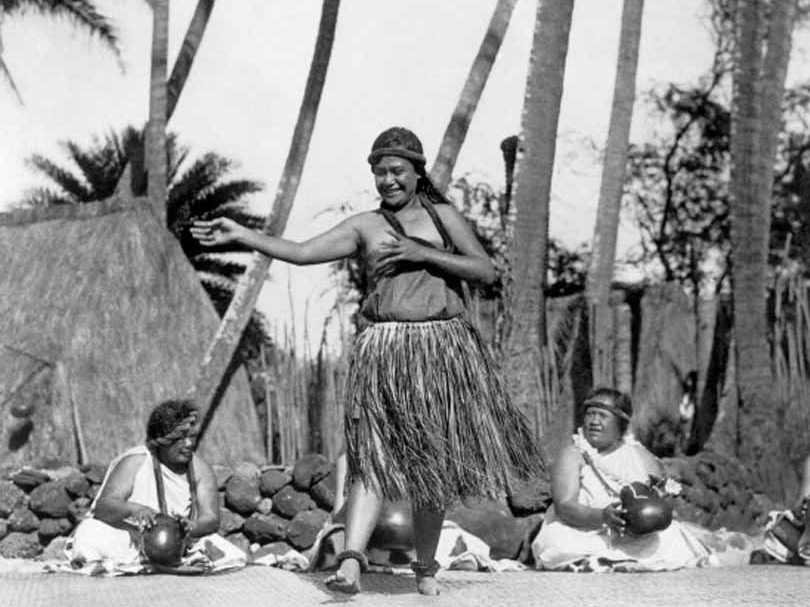
A native Hawaiian dancer performs while other women keep rhythm with gourds, 1924.
.jpg)
A surfer at Waikiki Beach stands on his head as he rides a wave into the shore, 1925.
.jpg)
Waikiki beach on Oahu, with Diamond Head in the background, 1925.
.jpg)
Four Japanese tourists pose at the Halekulani Hotel on Waikiki Beach with a native Hawaiian and his long surfboard, 1930.
.jpg)
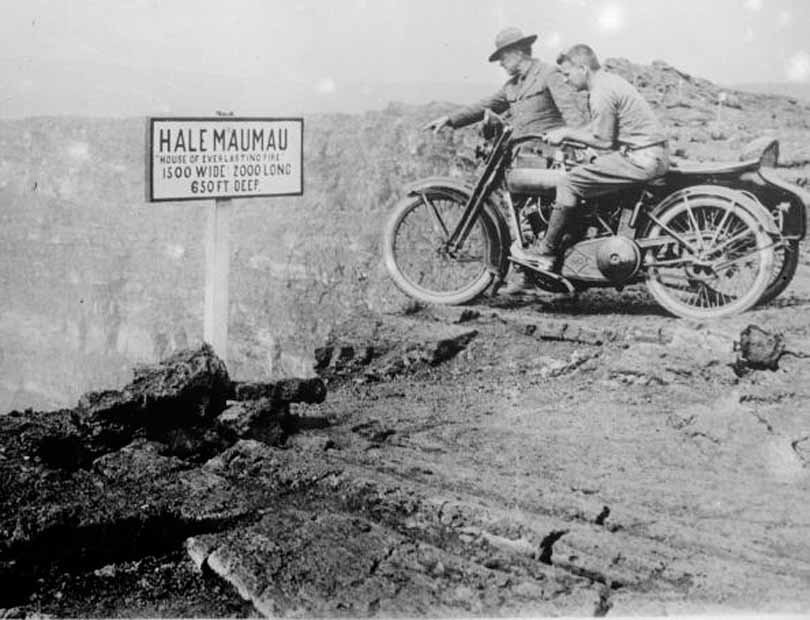
Tourists peer into mouth of Halemaumau or ‘House of Everlasting Fire,’ the inner crater of Kilauea, the most active volcano in the world (at the time), 1930.
.jpg)
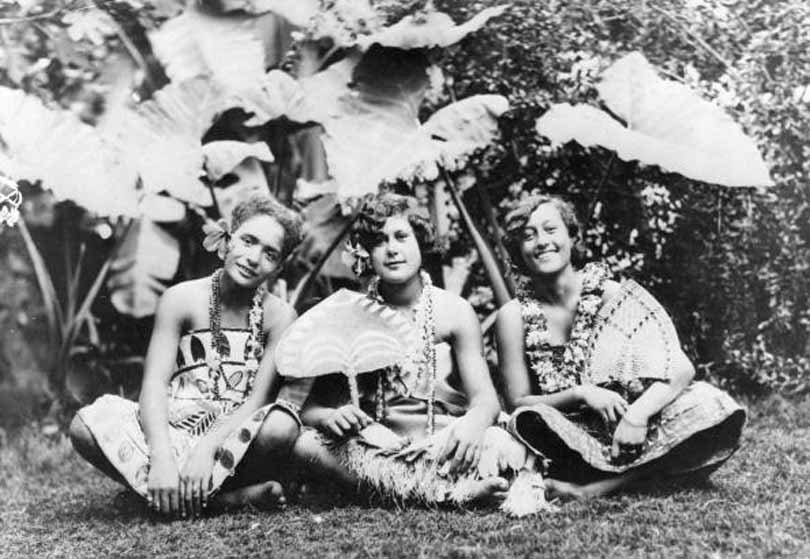
A group of Hawaiian girls sit against a tropical background, 1932.
.jpg)
The harbor at Honolulu, Hawaii looks serene, 1934.
.jpg)
PanAm Airways employees in Hawaii managed to create a full size golf course on the beach at Midway Island, where they play amongst the albatrosses, 1936.
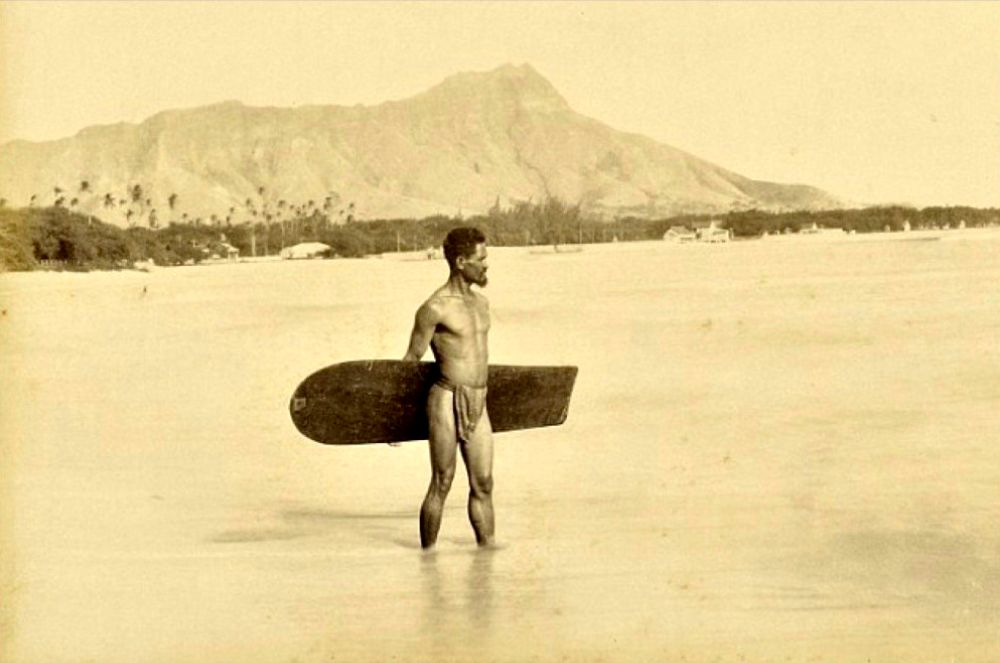
Photo of surfer wearing traditional garb with Diamond Head in the background. Oahu, ca. 1890.
Portraits of Lili‘uokalani: The Last Queen of Hawaiʻi

Liliʻuokalani (September 2, 1838 – November 11, 1917) was the last reigning monarch of the Hawaiian Kingdom and the only queen regnant in its history.
She ruled from January 29, 1891, until the monarchy was overthrown on January 17, 1893. The coup was organized by the Committee of Safety, a group made up largely of foreign residents and Hawaiian subjects of American descent in Honolulu.

Following her removal from power, Liliʻuokalani was imprisoned, during which time she wrote her autobiography, Hawaiʻi’s Story by Hawaiʻi’s Queen (1898). Born in Honolulu on the island of Oʻahu, Liliʻuokalani was the daughter of Analea Keohokālole and Caesar Kapaʻakea.
Shortly after birth, she was hānai, or informally adopted, by Abner Pākī and Laura Kōnia and raised alongside their daughter, Bernice Pauahi Bishop.

She received a Western-style education at the Royal School, where students of royal blood were prepared for leadership.
Along with her siblings and cousins, she was declared eligible for the throne by King Kamehameha III. She later married John Owen Dominis, an American-born official who served as Governor of Oʻahu.
Although they had no biological children, the couple adopted several. When her brother David Kalākaua became king in 1874, Liliʻuokalani was granted the title of princess, and in 1877, following the death of her younger brother Leleiohoku II, she was named heir apparent.

She also represented King Kalākaua abroad, including serving as an official envoy to the United Kingdom during Queen Victoria’s Golden Jubilee. Liliʻuokalani became queen in 1891, shortly after her brother’s death. Her reign was marked by efforts to restore the authority of the monarchy and expand voting rights that had been restricted under the Bayonet Constitution of 1887.
These reforms alarmed powerful business and political interests aligned with the United States.
In January 1893, with support from U.S. Marines ordered ashore to protect American interests, these groups overthrew the Hawaiian monarchy.


The presence of U.S. forces left the kingdom unable to defend itself, bringing an end to Hawaii’s sovereign rule. 3


