
A walk through vintage advertising reveals a world where women were constantly told they were not enough. One ad warns, “Don’t let them call you SKINNY,” while another claims cigarettes will keep them thin.
If worrying about their weight was not enough, they were also made to fear that they smelled bad.
Every part of a woman’s body was a potential source of embarrassment, from her breath to her armpits, her hair to her hands, and even her most private areas.
These ads painted a grim picture: a woman might lose her husband over “coarse pores,” “dishpan hands,” wrinkles, or a hint of body hair.
Each message was clear—her worth depended on meeting impossible standards. Here is a gallery of offensive ads from the past that reveal how advertising once shaped and shamed women.
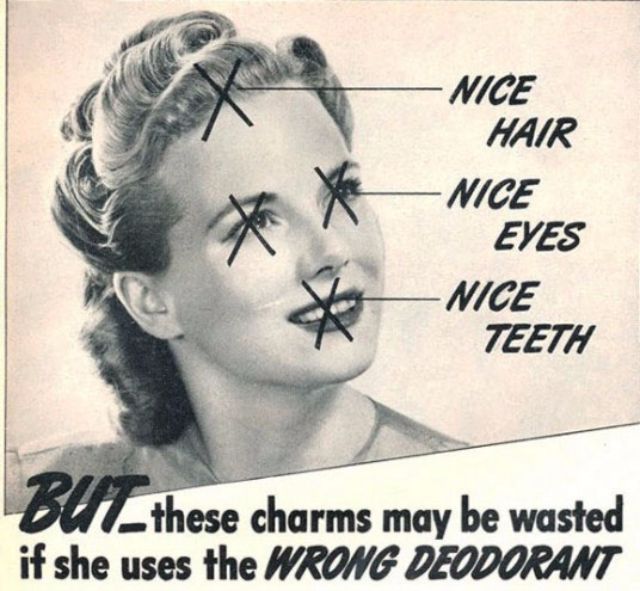
Without the right deodorant, this Odo-ro-no ad admonishes, one’s physical appeal is rendered worthless.
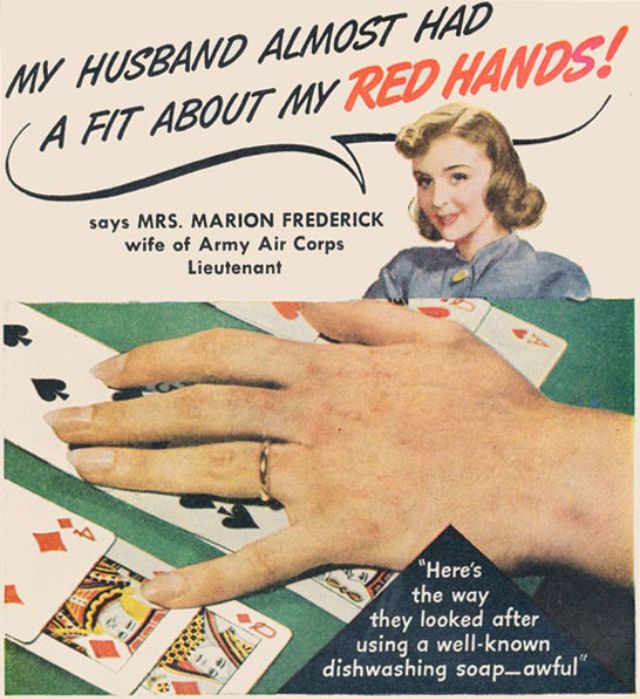
And, according to these ads, “dishpan hands” were traumatic to husbands—who, of course, never had to wash a dish.
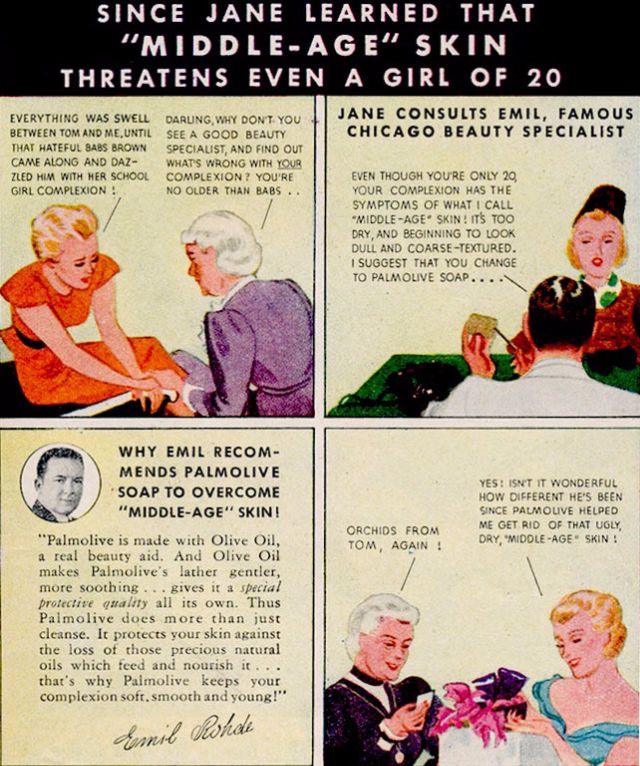
Somehow, this woman of 20 could lose her husband over her supposed “middle-age skin.”
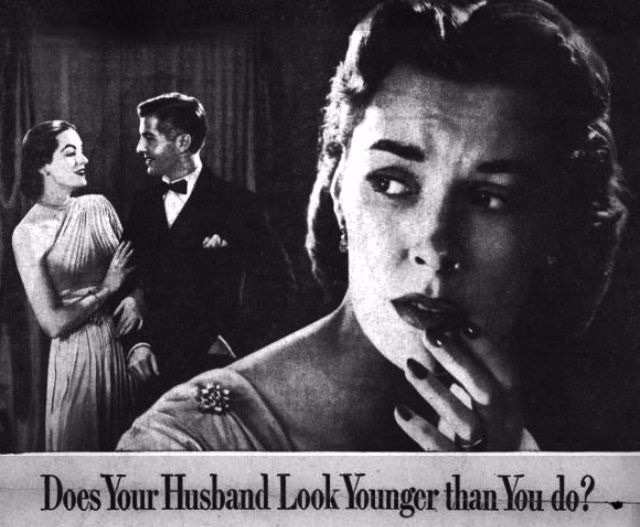
And if your husband encounters a younger-looking woman, forget it.
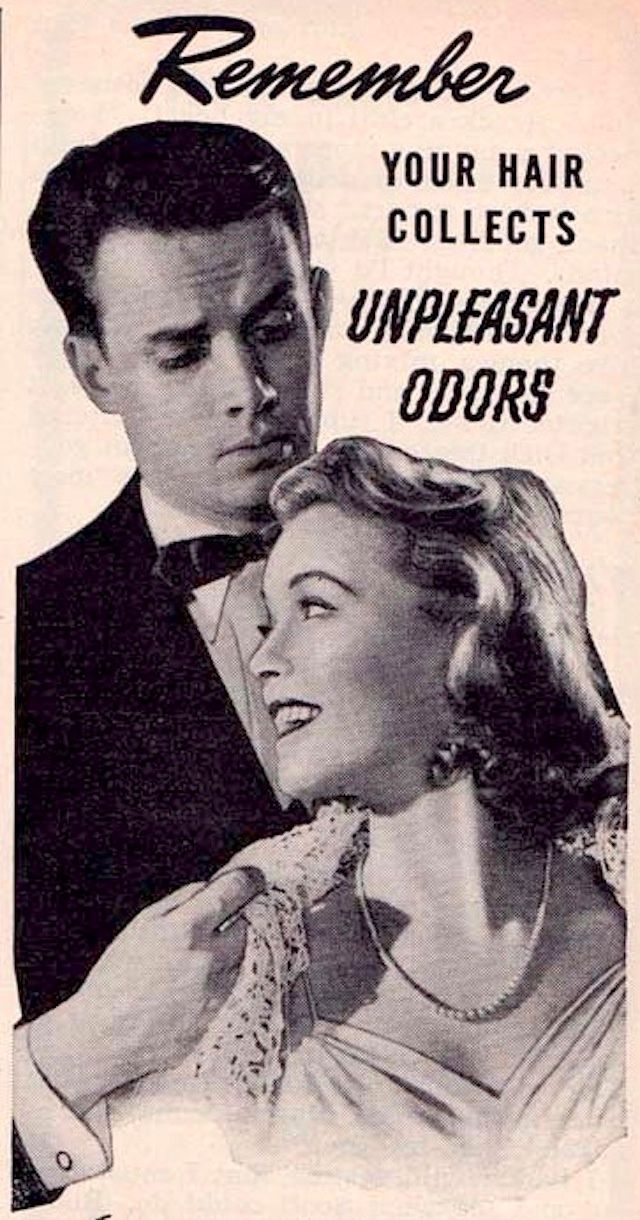
In the 1930s, dancing was an important social activity, and shampoo companies wanted women to worry about yet another way they could smell bad.
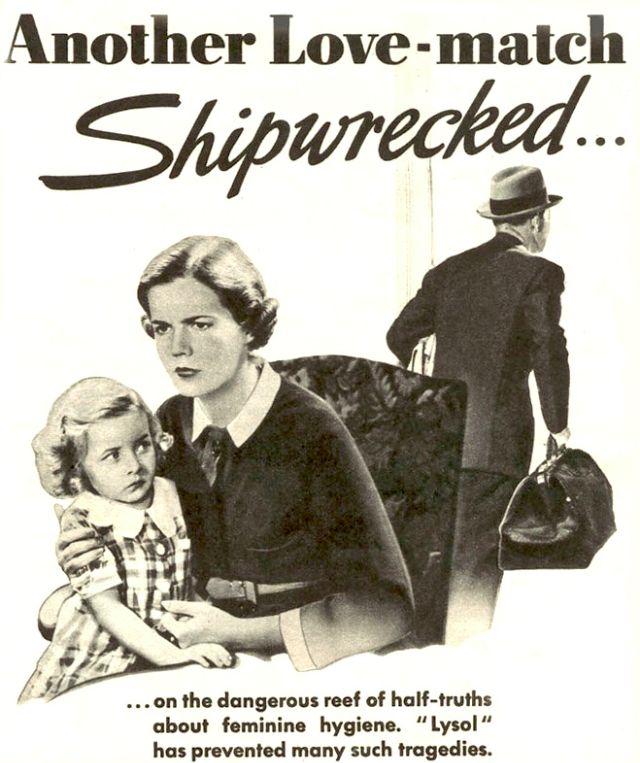
Ads in 19th century magazines sold devices to reshape one’s face.
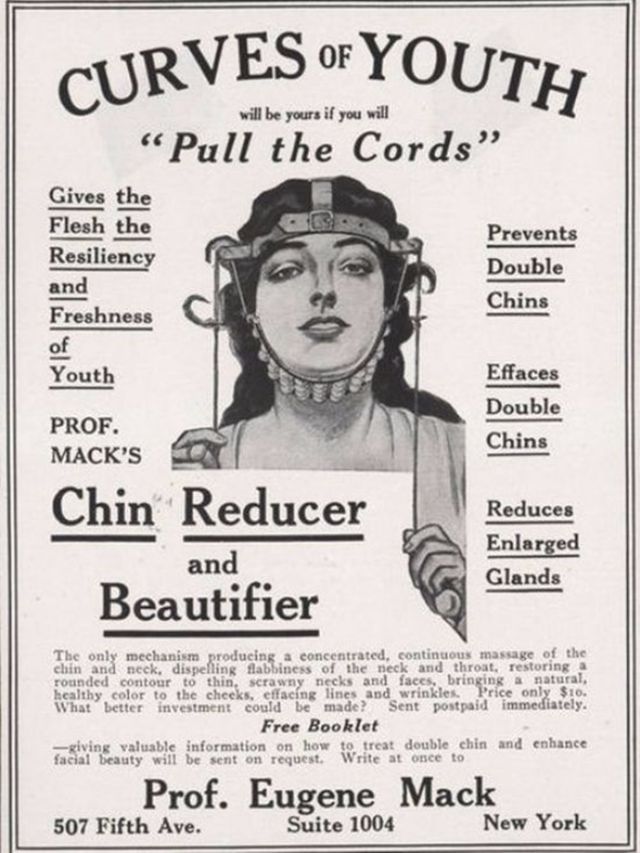
Lysol disinfectant, which was sold as a douche in the ’30s, produced endless ads showing a man leaving his wife over unspeakable “feminine hygiene” problems.
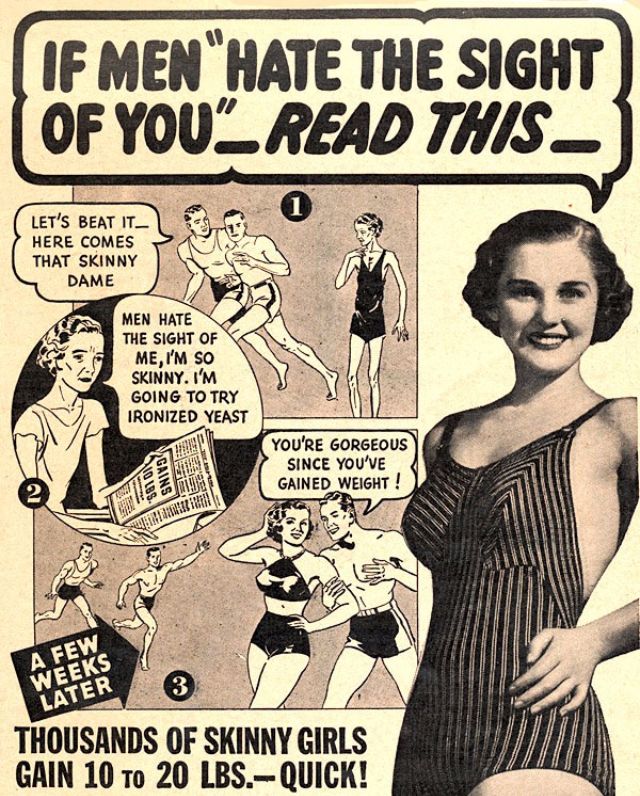
When women got thin due to hunger during the Depression, the slender, straight flapper silhouette went out of style. Ironized yeast products promised “skinny” women “weight,” by which they meant larger hips and breasts.
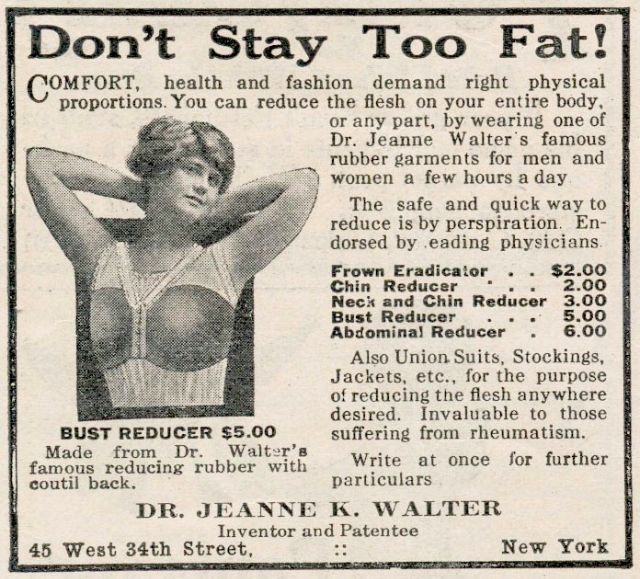
Strangely enough, this 19th century device promised to shrink the bust. Perhaps some breasts were considered too disproportionately large for the Victorians’ hourglass ideal?
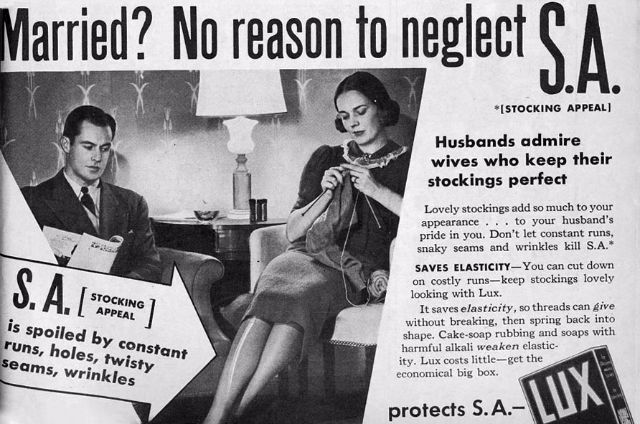
“Husbands admire wives who keep their stockings perfect.” In the 1930s, advertisers wanted women to worry about their “S.A.” or “Stocking Appeal.”
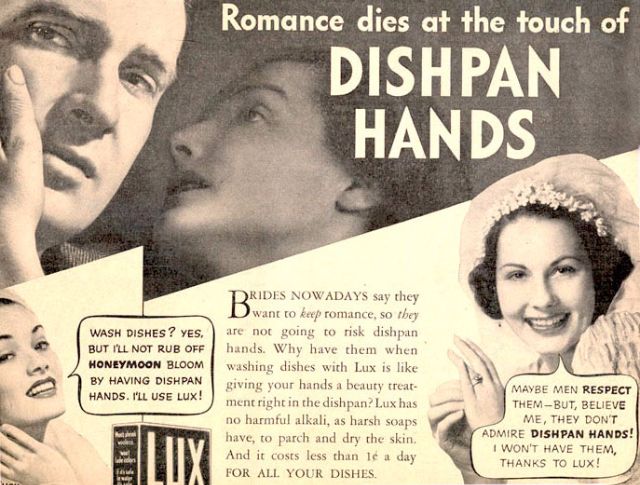
In 1930s ads, “dishpan hands” threatened marriages.
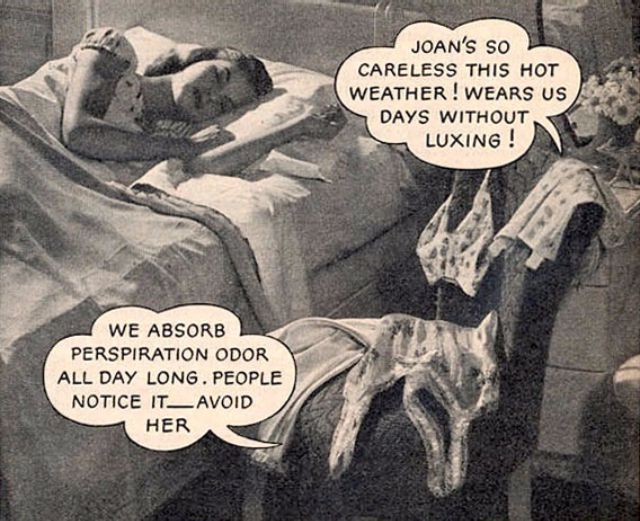
In this ad, pretty Joan has no idea why she’s so unpopular. At night, her undergarments gossip about her careless washing habits and the odor they’ve been emitting.
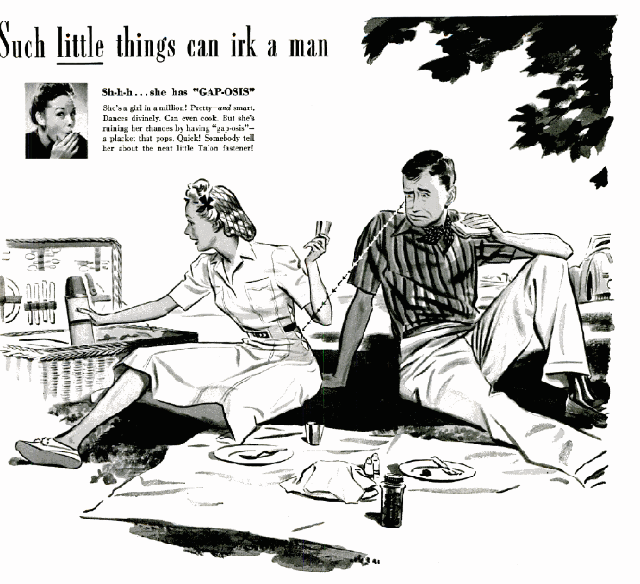
“She’s a girl in a million! Pretty and smart. Dances divinely. Can even cook. But she’s ruining her chances by having ‘gap-osis.’” That is, gaps where her skirt buttons.
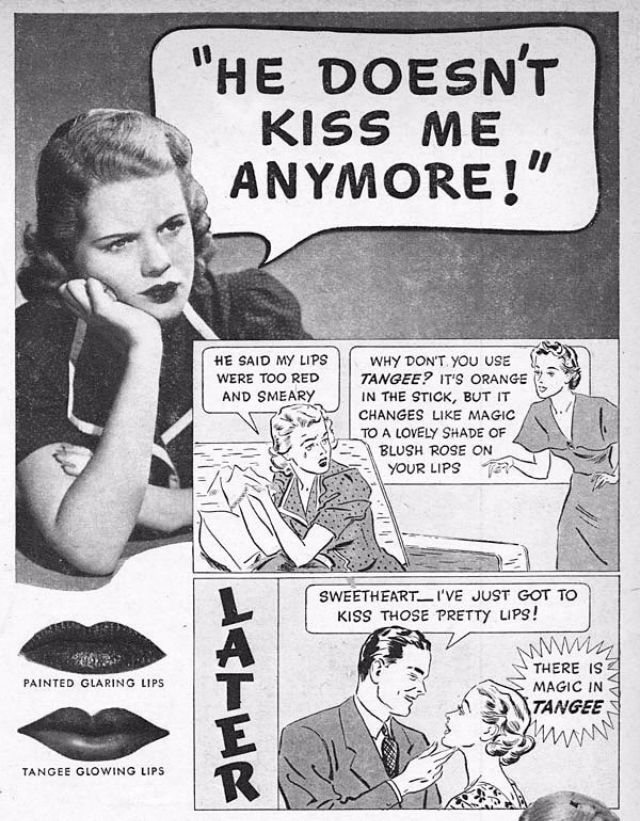
According to Tangee in the 1930s, a woman’s lips could be too red, smeary, glaring, and painted for a man to kiss.
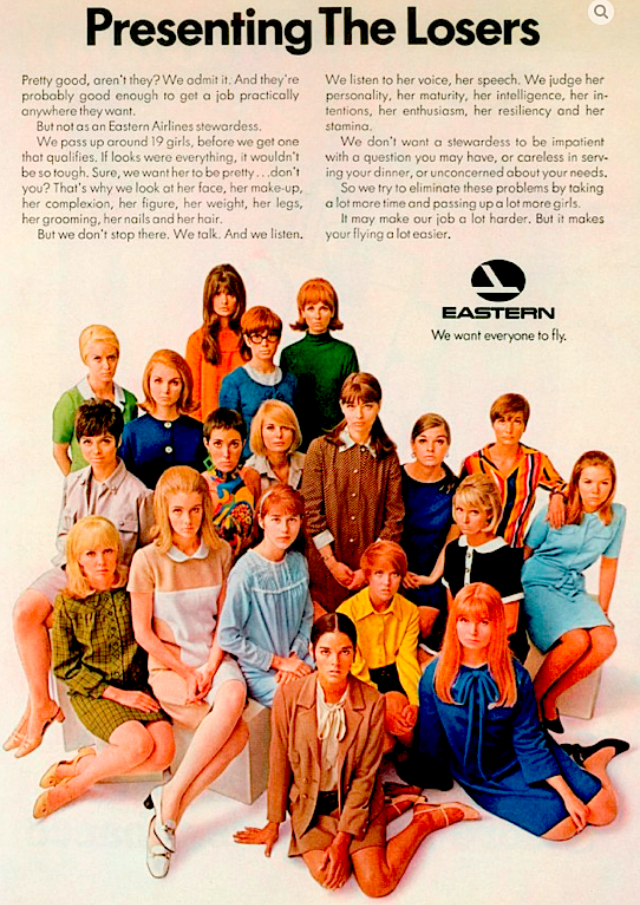
The qualifications for Eastern Airlines stewardesses in the 1970s: “Sure, we want her to be pretty… That’s why we look at her face, her make-up, her complexion, her figure, her weight, her legs, her grooming, her nails, and her hair. But we don’t stop there.”

On the surface, this 1930s Lysol ad is about a woman’s vaginal odor. But Lysol was also used as a contraceptive spermicide, which the “organic matter” line alludes to.
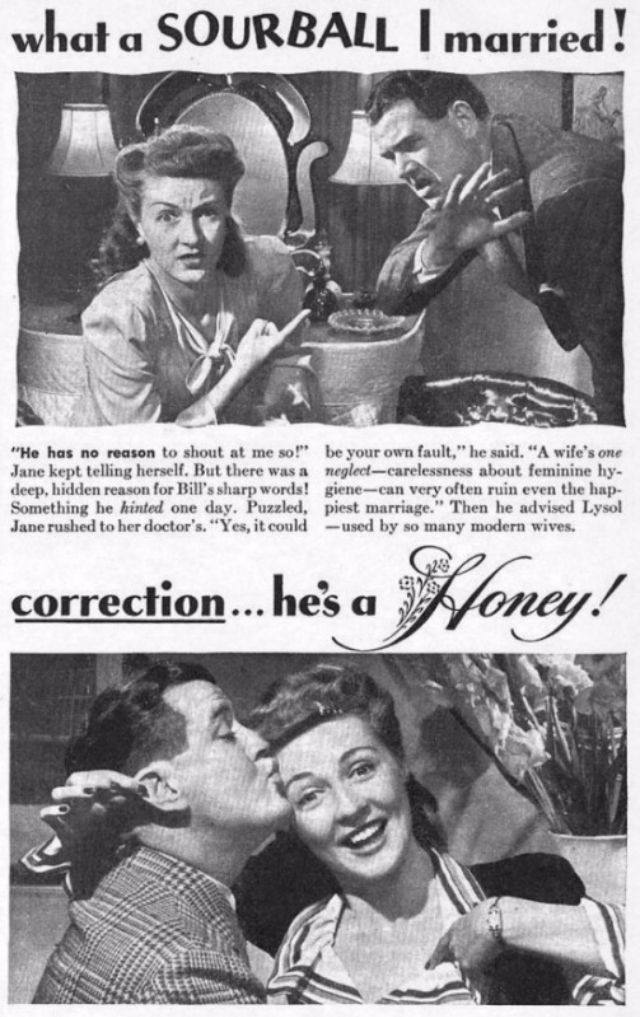
In this ad, Lysol turns a monster husband into a sweetheart.
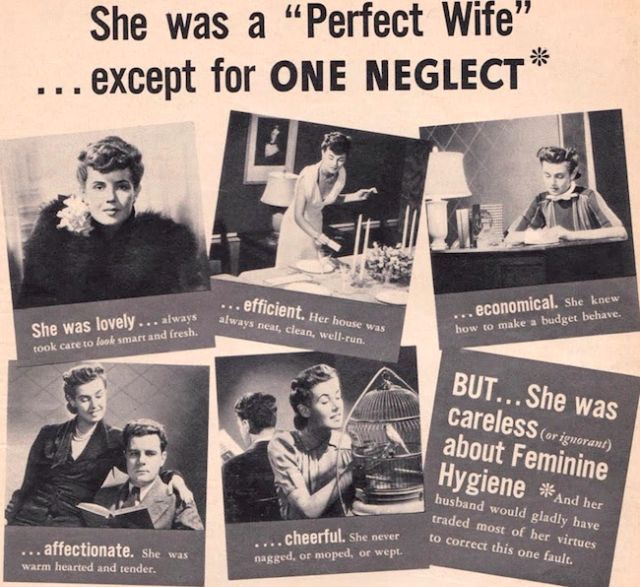
This Lysol ad neatly catalogs all the expectations of good wives in the 1930s.
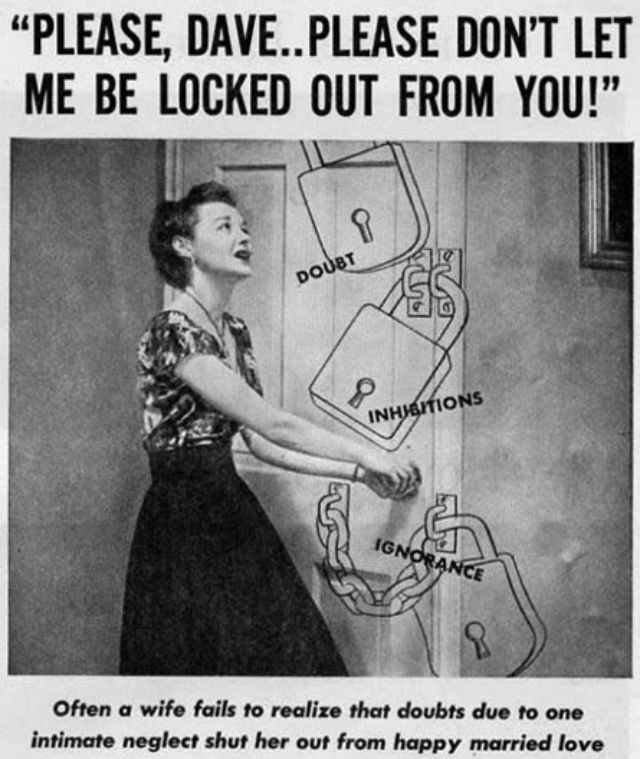
In Lysol ads, failures of “feminine hygiene” led to aloof husbands.
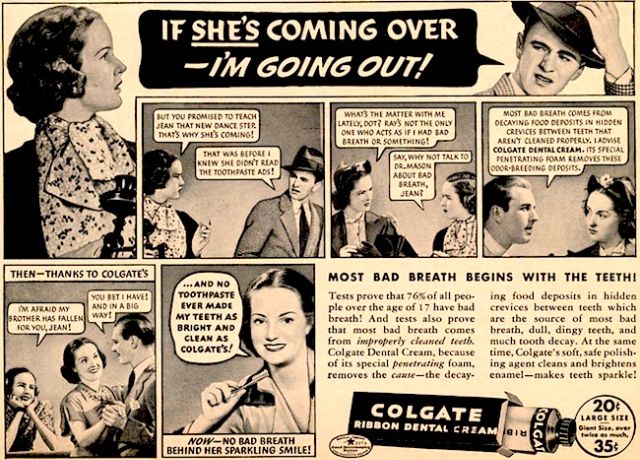
In addition to smelly lady parts, a woman also had to worry about her breath.
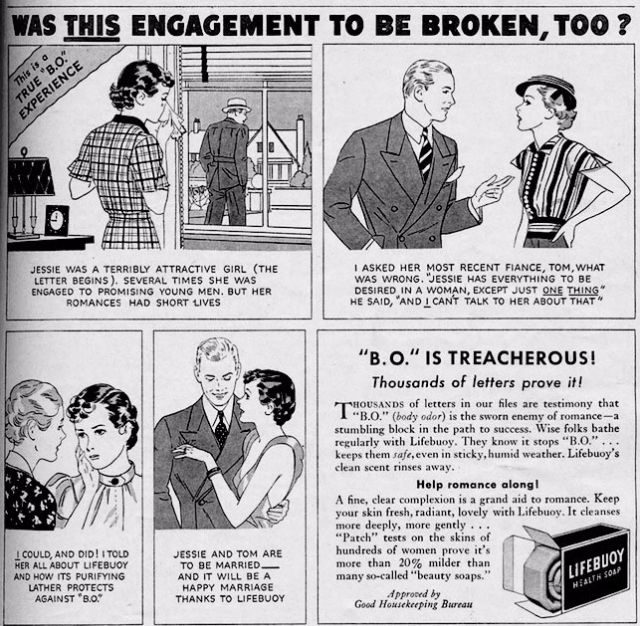
Apparently, some completely lovely ladies just didn’t know how to wash properly.
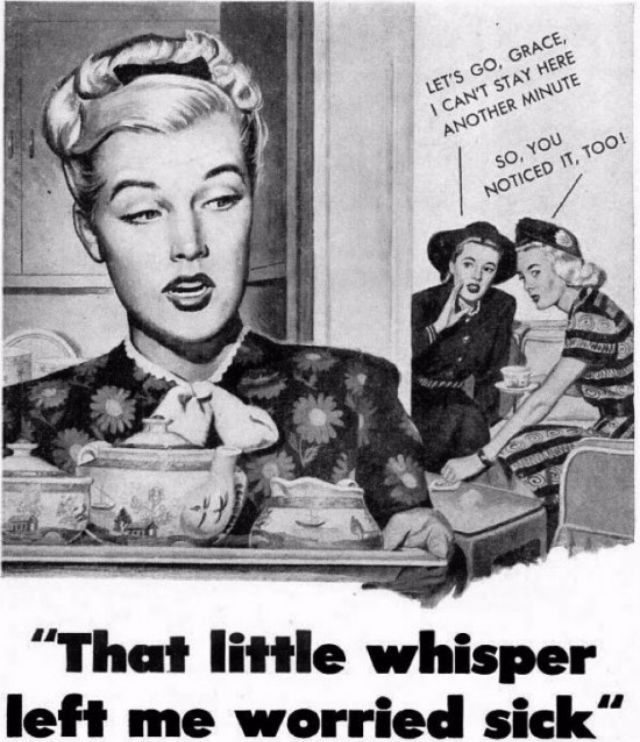
If you didn’t use the right soap or deodorant, ads warned, your girlfriends would gossip about you behind your back.
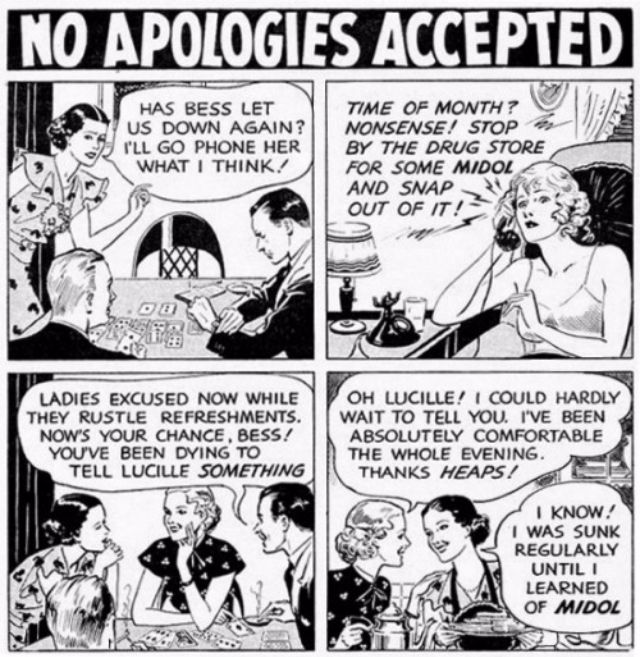
Early Midol ads encouraged women to get things done on their periods.
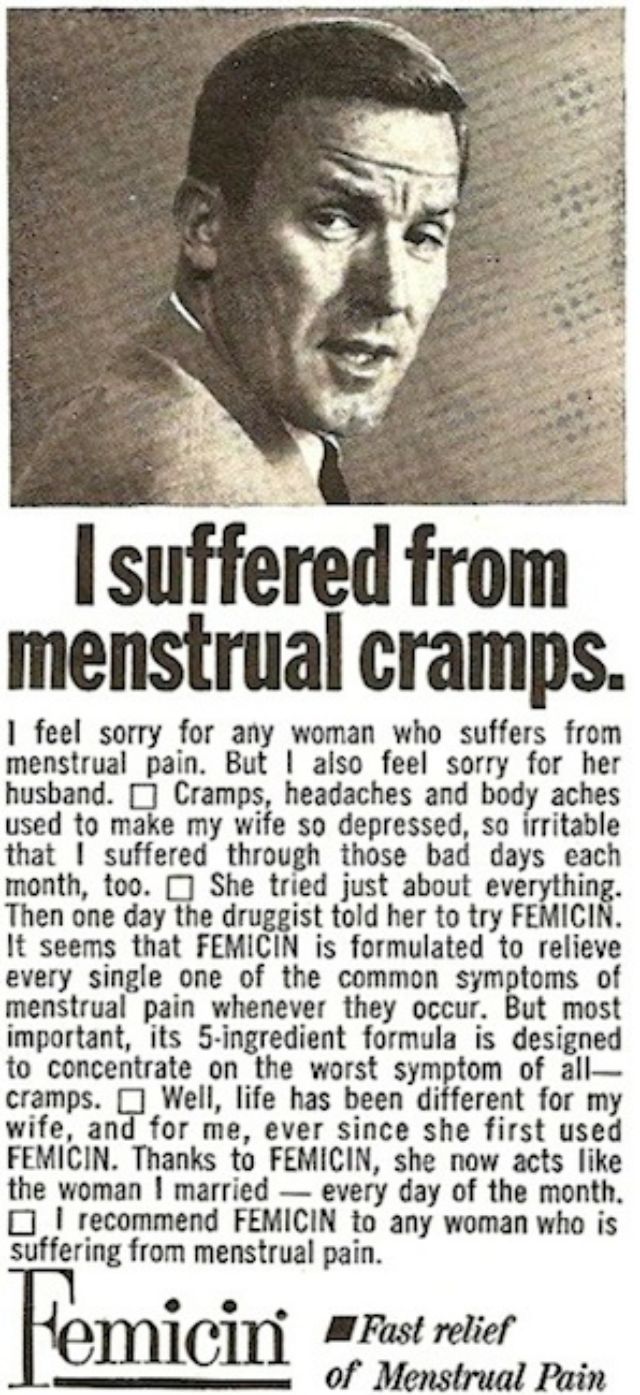
It was also emphasized that women on their periods should not make men suffer.
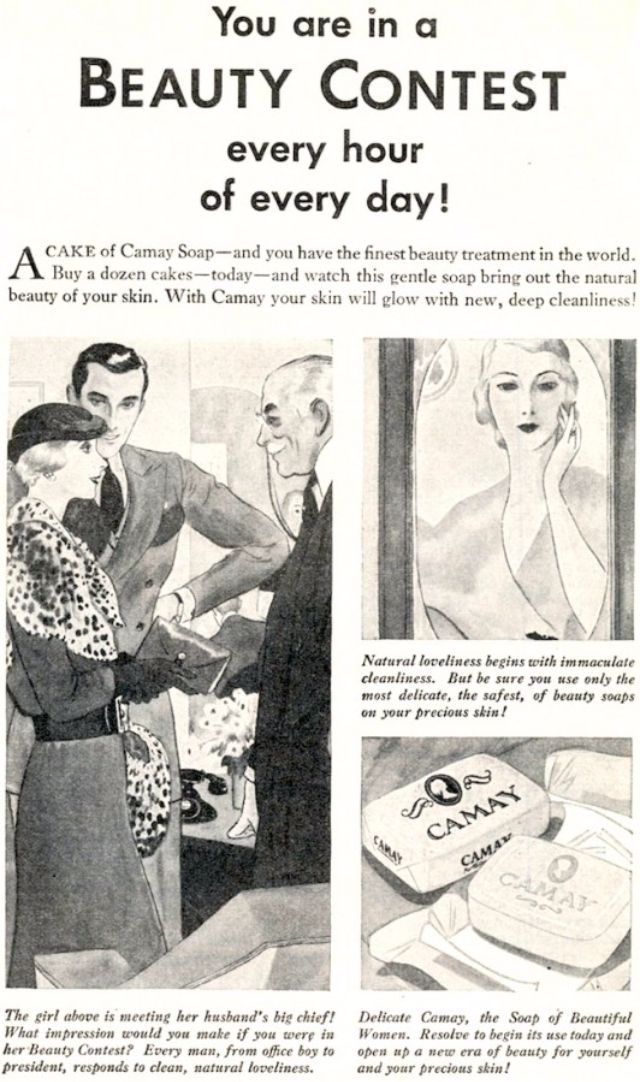
In this ad, a woman has to stay pretty and youthful to impress her husband’s boss.
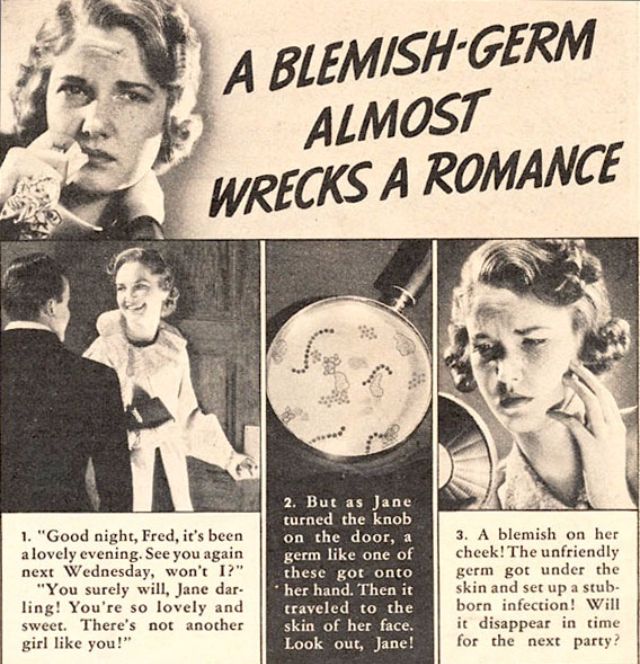
According to this 1930s ad, all it takes is one zit to destroy a blossoming romance.
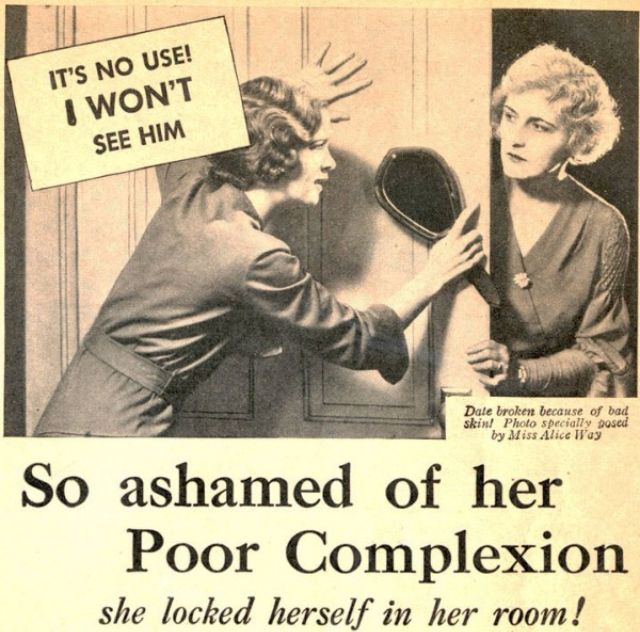
Given the pressures, you might understand why this woman with acne wants to hide.
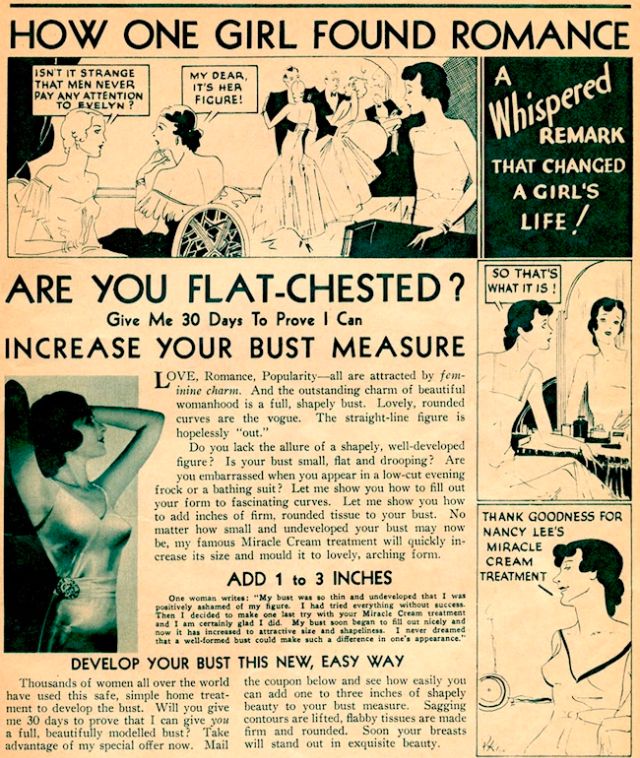
Love, Romance, Popularity—all are attracted by feminine charm. And the outstanding charm of beautiful womanhood is a full, shapely bust.”
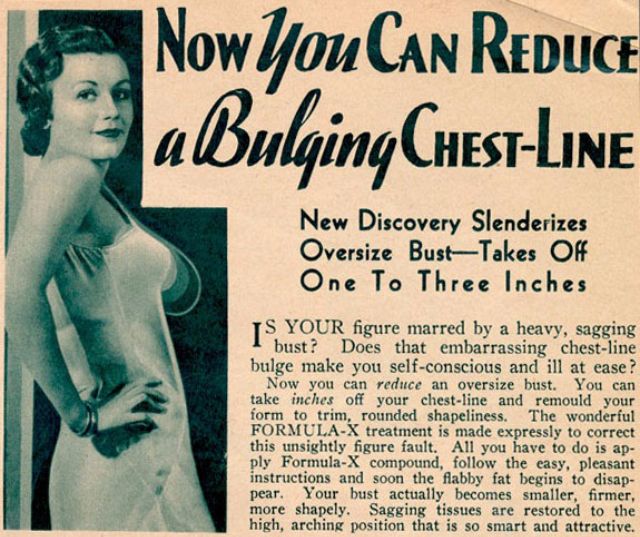
However, according to this ad, one’s chest-line can bulge too much.
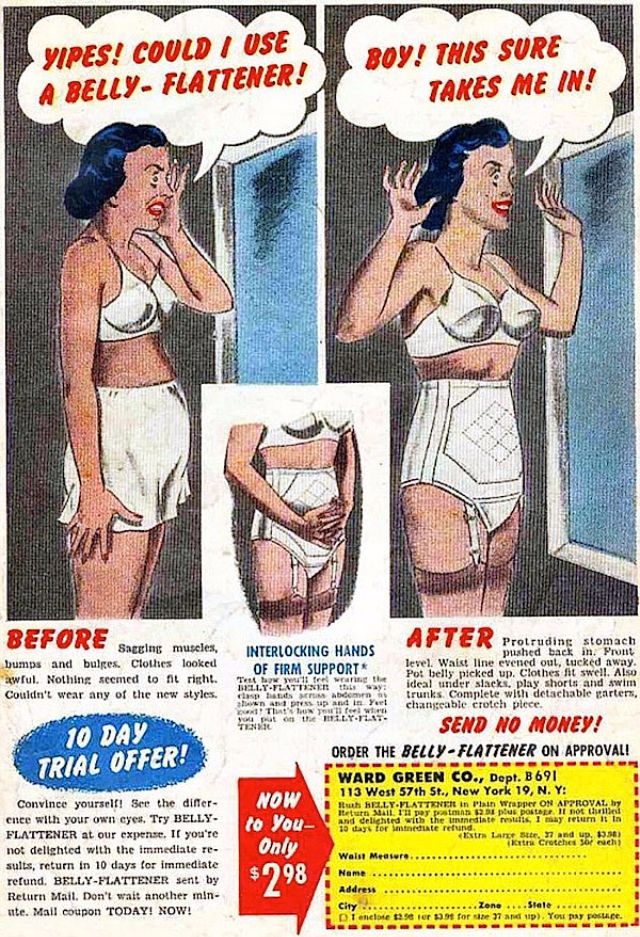
Whether it was stylish to be busty or flat-chested, one constant in the 20th century was the desire to hide and control the belly.
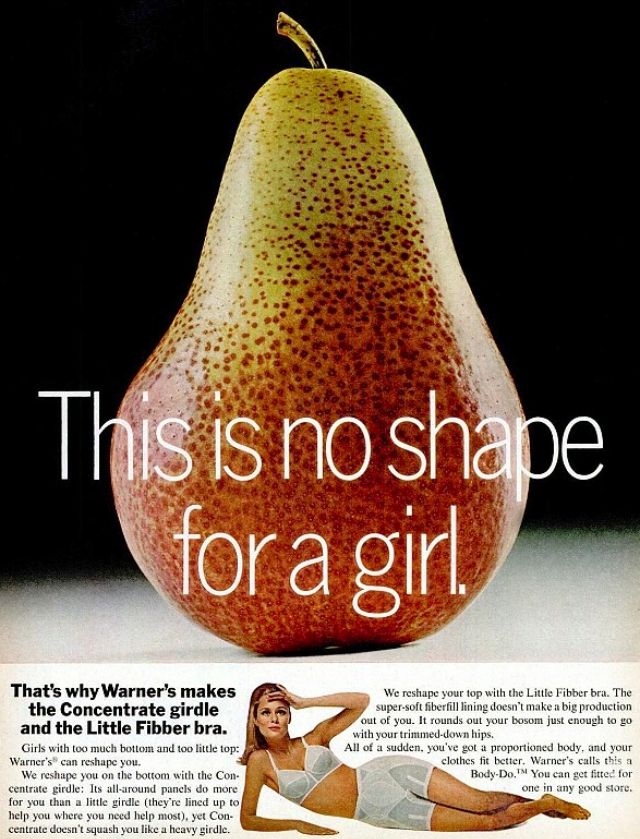
Even in the ’70s, ads offered ways to change the body into a more ideal shape.
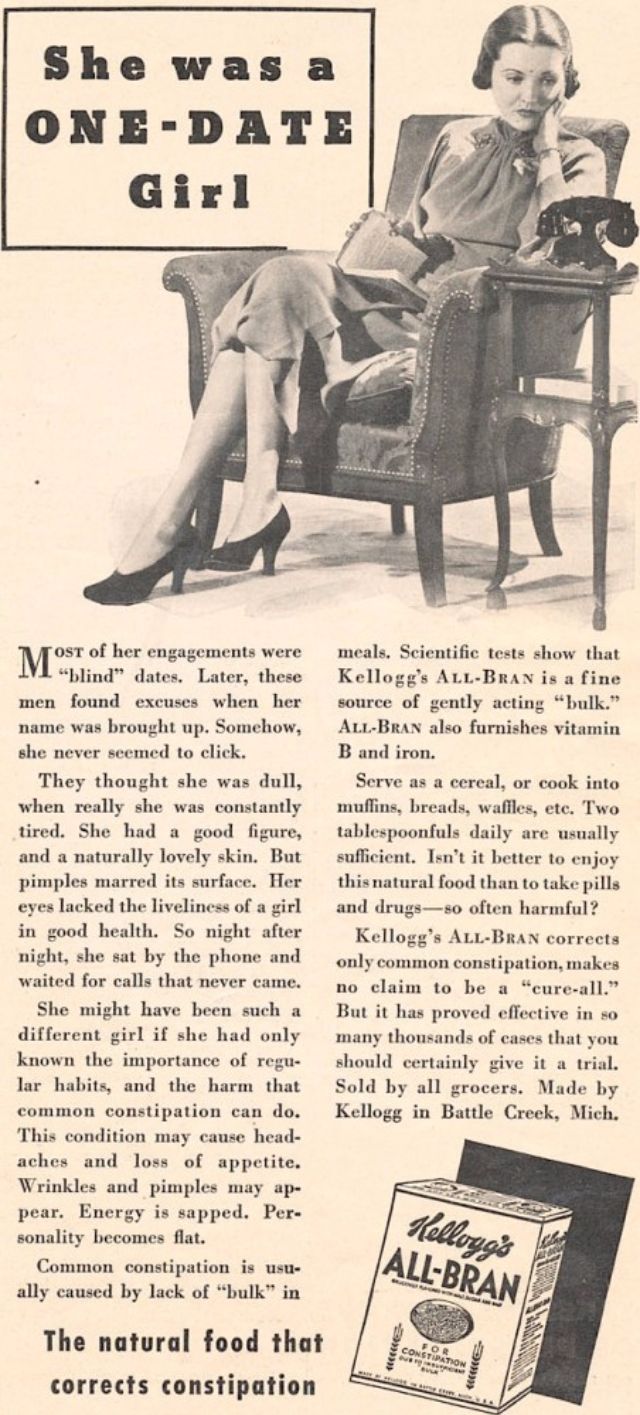
According to this ad, constipation isn’t just uncomfortable for the woman, it also kills her personality, and hence, her dating life.
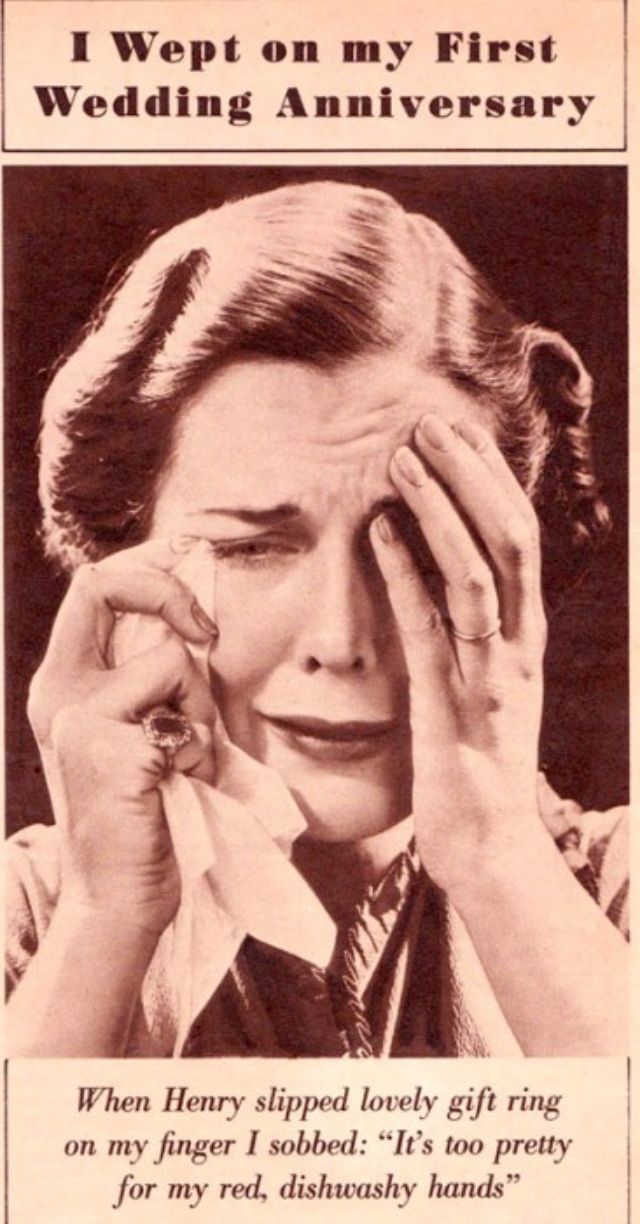
“Dishpan hands,” apparently, were such a serious matter that they could drive a woman to tears.
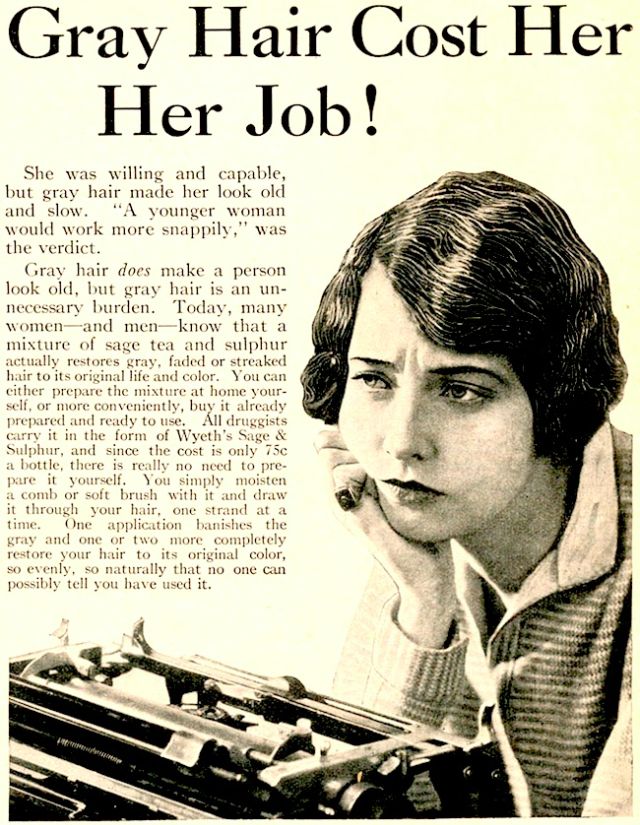
Looking old was also a liability for a woman in the workforce.
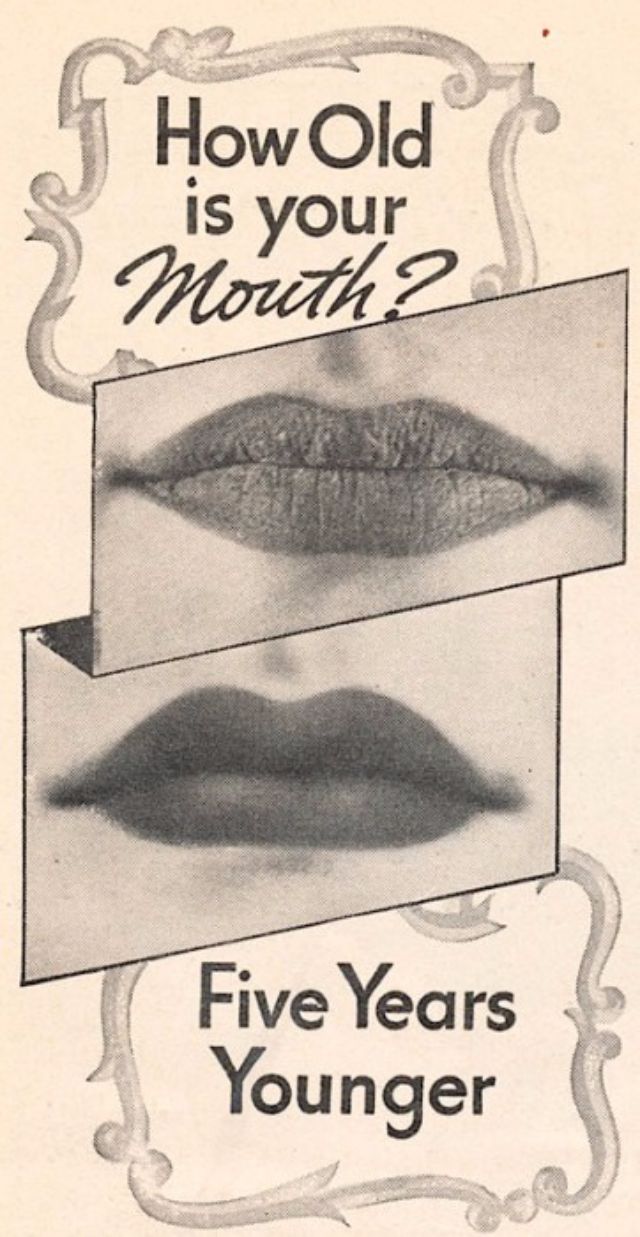
Ads also wanted women to feel anxious about the smoothness of their lips.
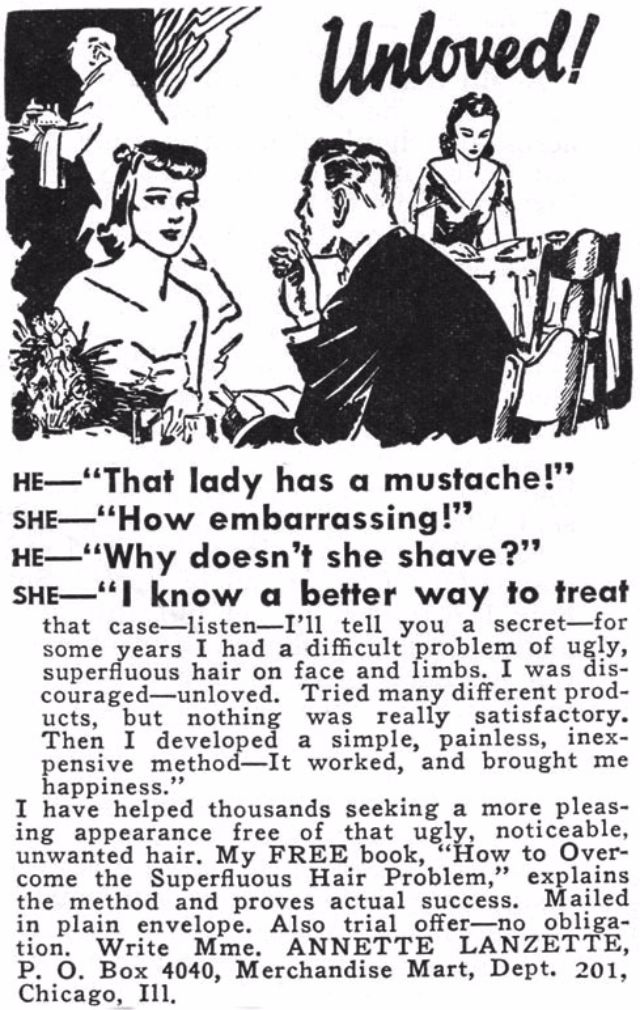
In this ad, a couple gossips about an “unloved” woman with a mustache.
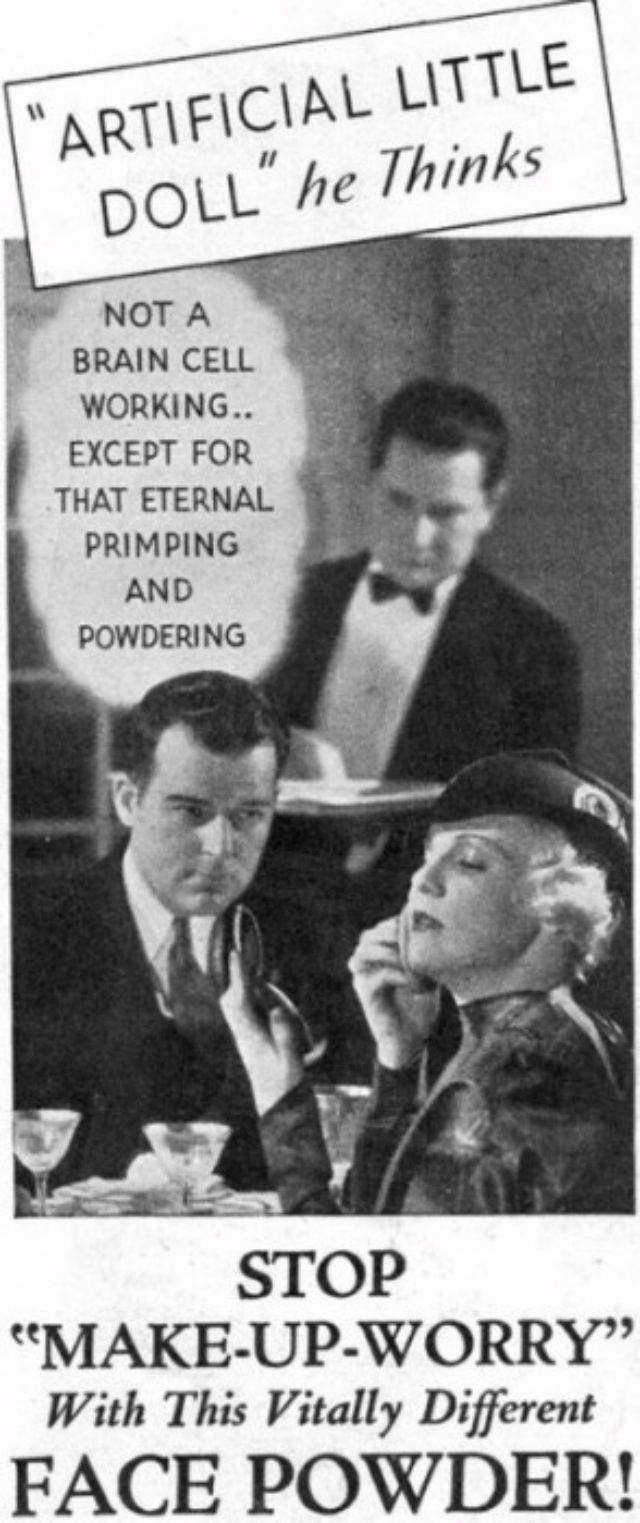
But, naturally, a woman should never appear to be vain.
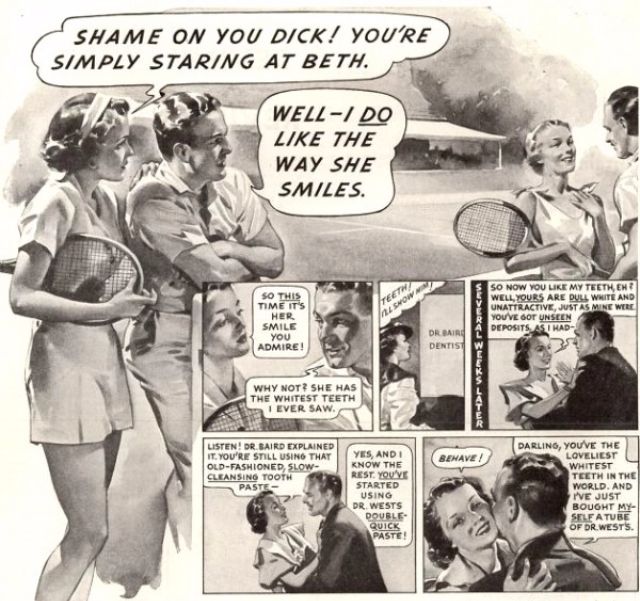
In these ads, most husbands had a wandering eye, that could even been tempted by whiter teeth.
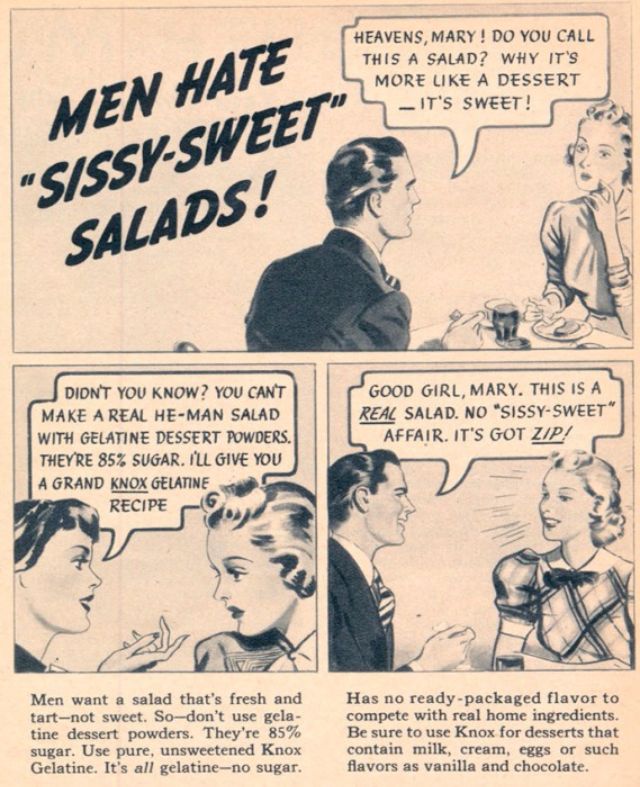
And the perfect woman always fed her husband “he-man” food and not “sissy-sweet salads.”
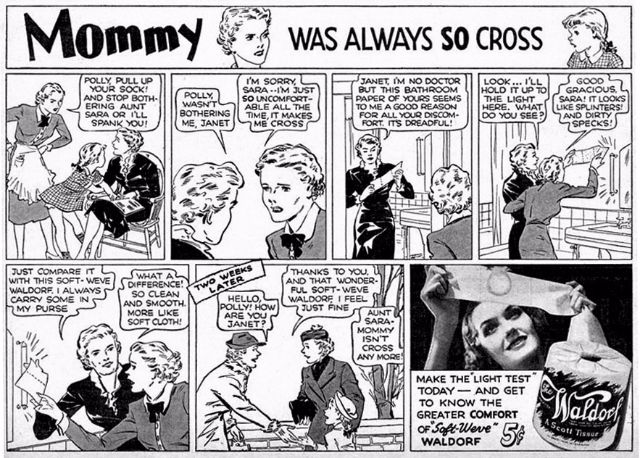
An example from a series of 1930s Waldorf ads about bad toilet paper ruining family life.
